Countrywide advisory (Government of Canada)
Exercise increased cautionExercise a high degree of caution
Government of Canada · checked 26 Jul 2026
 Pat Hooper from Chicago, IL, USA / CC BY-SA 2.0 (Wikimedia Commons)
Eastern Africa
 Madagascar
The world's eighth largest island with unique wildlife found nowhere else, towering baobabs, and pristine beaches waiting to be discovered by few visitors.
✦Madagascar's lemurs comprise 10% of all primate species on Earth; each island within the island has endemic species.
✦The baobab trees are so alien they inspired the Little Prince's illustration; some species exist only on Madagascar.
✦Malagasy is an Austronesian language, closer to Borneo than to African neighbors, yet 98% of the vocabulary is Bantu.
Iconic 2km-long tree-lined road with ancient baobabs creating a cathedral of nature.
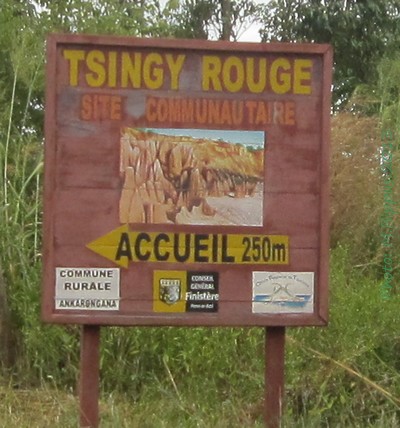
Red stone needles rising from eroded canyons in a landscape unlike anywhere else.
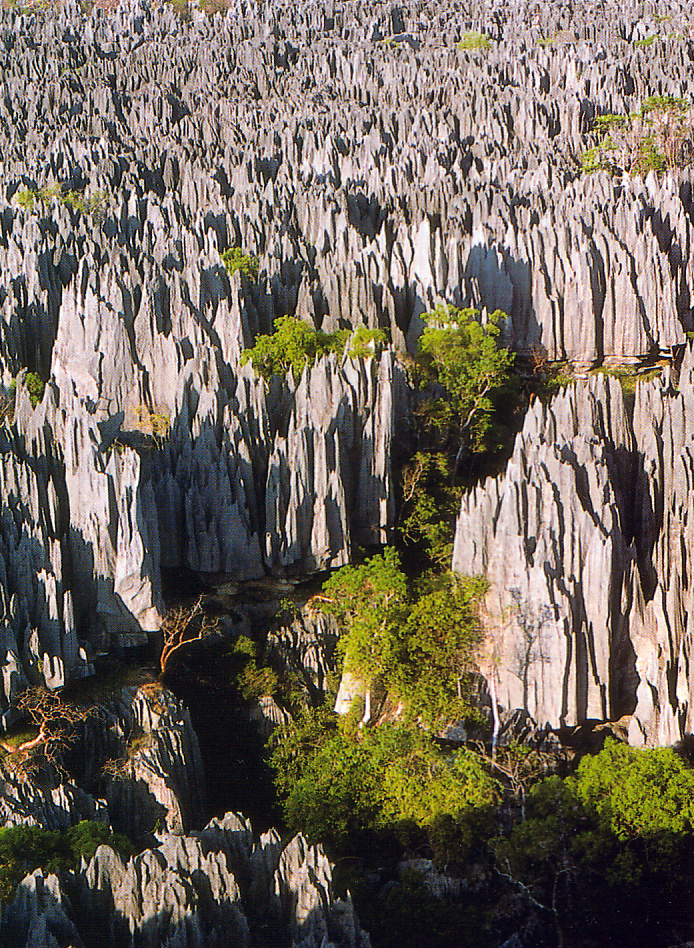
UNESCO World Heritage site of razor-sharp limestone needles and canyons creating an impassable labyrinth.
Madagascar is a world unto itself, floating 400km off the Mozambique Channel coast. The landscape defies expectation: avenue of baobabs in the southwest, rainforest canyons in the east, volcanic highlands in the center, and turquoise reefs and beaches rimming almost every shore. The island is a living laboratory of endemism, where lemurs outnumber most fauna and 90 percent of wildlife exists nowhere else on Earth. The culture blends Borneo ancestry with Arab, African, and Indian influences. Malagasy is the primary language, with French widely spoken in tourism and business. Visitors encounter a rhythm that honors the vazaha (foreigner) but expects patience with island time. Travel here rewards flexibility and curiosity. A trip feels like stepping into a parallel world. You navigate red-clay roads past rice paddies and fishing villages, swim in lagoons framed by coral, climb to cathedral-like canyons carved by water, and sit in markets thick with color and trade. The infrastructure is raw; the rewards are profound.
Last checked 26 Jul 2026
Every zone below is rated against a named government advisory and carries the date we last read it. Most of any country is calmer than its headlines.
Exercise a high degree of caution
Government of Canada · checked 26 Jul 2026
Capital and surrounding highlands are broadly safe during daylight; petty theft and occasional robbery occur, especially in poorly lit areas at night.
Avoid: Avoid Anosibe district and isolated neighborhoods after sunset. Do not hike in hills around the city without a guide.
UK FCDO · checked 6 Jul 2026
Tourist areas including Toliara, Nosy Be, and rainforest parks are secure with normal precautions. Road conditions are poor but safe for experienced travelers.
UK FCDO · checked 6 Jul 2026
Toliara and southwest coast see few tourists but are generally secure. Banditry is rare on main roads; avoid remote areas after dark.
Avoid: Isolated inland tracks without local guides.
UK FCDO · checked 6 Jul 2026
Madagascar was one of the last substantial landmasses on earth to receive people, and how it was settled is one of the strangest facts in the history of human movement. Malagasy, the language spoken across the island, is Austronesian, the same family as Malay, Javanese and the languages of the Philippines and the Pacific, and Madagascar sits at its absolute western edge, thousands of kilometres from any other Austronesian speakers. Linguists trace it to the Southeast Barito languages of southern Borneo, its closest living relative being Ma'anyan, still spoken along the Barito River in Kalimantan, which means the ancestors of the Malagasy crossed the Indian Ocean from Borneo, in outrigger canoes or by staged voyages, arriving on an island off Africa while speaking a language unmistakably rooted in island Southeast Asia. Mitochondrial DNA studies back a specific version of this, tracing the maternal line of the modern population to a founding group of around thirty women, roughly 93 percent of Indonesian descent, arriving somewhere near 1,200 years ago. Around the same period or after, Bantu-speaking Africans arrived from the mainland and mixed with the Austronesian settlers, and Arab and Swahili traders added further contact and vocabulary, leaving a fusion of Southeast Asian and African origins found nowhere else on the planet. How early this began is still moving. ...
The full history, the peoples, and pieces written by people from hereAntananarivo rises on a hillside at high altitude, a sprawling capital with a colonial feel, terraced architecture climbing steep slopes, and markets bursting with goods. The city feels distinct from mainland African capitals, with cooler temperatures, different rhythms, and a Malagasy culture that looks partially toward Asia. Beyond the capital, Madagascar is shockingly diverse: the rainforests of the northeast sheltering lemurs and chameleons, the spiny forests of the south that look otherworldly, pristine beaches on the coasts, and the highlands where traditional communities farm rice in ancient patterns. The people speak Malagasy (not Bantu, but Austronesian), practice Catholicism mixed with ancestor veneration, and maintain strong village-based communities. Food is unique (rice, seafood, tropical fruits); music has Indian, African, and Malagasy influences; and the overall feeling is of a place that has developed entirely independently from continental Africa.
Festivals and moments worth timing a trip around.
The famous turning of the bones: a family ritual where ancestors' remains are rewrapped in new cloth, paraded through towns, and feasted in celebration of family and eternal remembrance. Joyful and deeply spiritual.
Madagascar's independence day with national ceremonies, parades in Antananarivo, official celebrations, and public displays of national pride.
Contemporary celebration of Malagasy music, dance, theater, visual art, and cultural performances. Local and regional talent showcasing island creativity.
Humpback whales migrate to Malagasy waters for breeding; boat expeditions offer opportunities to witness these magnificent creatures in their seasonal journeys.
Guided journeys into Madagascar's protected rainforests to encounter indri lemurs, ring-tailed lemurs, chameleons, and the extraordinary biodiversity that defines the island's evolution.
Before you go
You have the zones as they stand today, and they do move, so when one in Madagascar changes rating or an advisory we cite is rewritten, we will tell you. That is the only reason we will write.
