Countrywide advisory (Government of Canada)
Exercise normal precautionsExercise normal security precautions (with regional advisories) Regional advisories apply; see the source for zone-level detail.
Government of Canada · checked 26 Jul 2026
 Volcanoes National Park / CC BY-SA 4.0 (Wikimedia Commons)
Eastern Africa
 Rwanda
A land of a thousand hills, stunning national parks protecting endangered mountain gorillas, and a society rebuilt from tragedy into one of Africa's most organized and forward-moving nations.
✦Rwanda has more mountain gorillas than any other country; fewer than 900 exist worldwide.
✦The country banned plastic bags in 2008, making it one of the first African nations to do so.
✦Lake Kivu, shared with Congo, contains billions of tons of dissolved methane, enough to power the region for decades if extraction proves viable.
Protected forest in Virunga Mountains home to endangered mountain gorillas and accessible via guided treks from nearby towns.
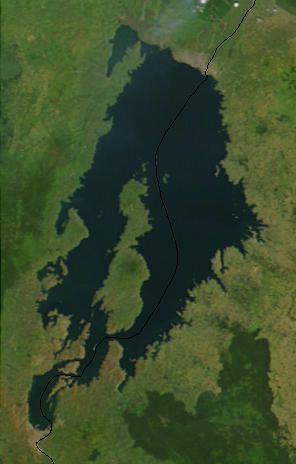
Large rift lake on western border with beaches, water sports, and relaxed beach town vibe.
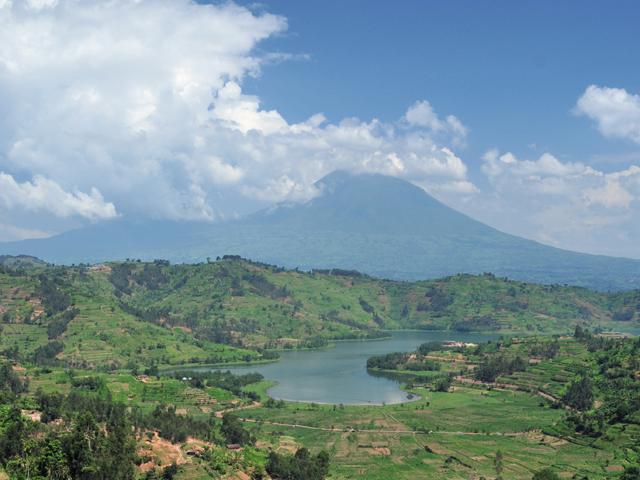
Ancient rainforest protecting rare primates and canopy walks suspended high above the forest floor.
Rwanda is defined by topography: lush green hills roll continuously from south to north, punctuated by volcanic peaks, crater lakes, and dense forests. The capital Kigali sits centrally; the far north holds the Virunga Mountains and Volcanoes National Park (mountain gorilla habitat); the west and northwest have lake systems and wetlands; the east is drier savanna. The entire country fits into roughly 26,300 sq km, making travel between regions quick. The society is Bantu-majority and Kinyarwanda-speaking. Historically, the nation experienced genocide in 1994; the recovery and reconciliation that followed are remarkable and visible in modern infrastructure, education, and governance. English and French are widely spoken; the culture balances tradition with pragmatic modernization. Religion is predominantly Christian with syncretic elements. A trip feels purposeful and well-organized. The mountain gorilla experience is life-changing. The landscape is undeniably beautiful. Travelers encounter a nation visibly committed to growth, safety, and preserving its natural patrimony. The recent history is present but not oppressive; memorials exist alongside thriving communities.
Last checked 26 Jul 2026
Every zone below is rated against a named government advisory and carries the date we last read it. Most of any country is calmer than its headlines.
Exercise normal security precautions (with regional advisories) Regional advisories apply; see the source for zone-level detail.
Government of Canada · checked 26 Jul 2026
Eastern and western borders are generally safe on the Rwandan side. DRC side should be avoided; seek advice before crossing.
Avoid: Do not cross into eastern DRC. Border crossings are safe; it is areas beyond that require caution.
UK FCDO · checked 6 Jul 2026
Capital and surrounding areas are safe with normal precautions. Petty theft is rare. The city is clean, organized, and welcoming.
UK FCDO · checked 6 Jul 2026
Park and surrounding regions are safe and well-monitored for gorilla trekking. Park rangers and guides ensure security.
UK FCDO · checked 6 Jul 2026
Lake Kivu, Nyungwe Forest, and western regions are safe and increasingly touristed. Infrastructure is developing.
UK FCDO · checked 6 Jul 2026
Rwanda's human story begins in its forests rather than its hills. The Twa, a hunter-gatherer people related to the forest populations of the wider Great Lakes region, are understood to be the oldest surviving inhabitants of the land, living off the montane forest before farmers or herders arrived. Between roughly 700 and 1500 CE, Bantu-speaking agriculturalists and, later, cattle-keeping migrants moved into the same hills, and over centuries the three labels that would come to define Rwanda, Twa, Hutu and Tutsi, took shape. The scholarship on this question converges on one point: these were not ethnic or racial groups in the sense the words later carried. Twa described people who hunted or worked pottery and fire, Hutu described farmers, and Tutsi described those who held large herds of cattle, the principal form of wealth in the kingdom. A Hutu family that acquired cattle through marriage, skill or royal favour could become Tutsi within a generation, and the boundary moved with the fortune. Oral chronicles from before colonial rule barely use the three words as fixed group identities at all. Out of these fluid societies came the Nyiginya kingdom, consolidated from the seventeenth century by a ruling lineage that traced itself back to a founding king, Gihanga. ...
The full history, the peoples, and pieces written by people from hereKigali rises from its hillsides with new buildings and glass fronts; the genocide memorial stands quietly at the center, a space where healing still unfolds. Young Rwandans stride through malls and tech hubs; the tech sector is genuinely thriving, not hyped. The countryside remains what it always was: impossibly green hills cascading toward Uganda and Burundi, villages perched on ridges, a landscape that feels spiritual just by existing. Daily life carries both the openness of a country moving forward and the quiet weight of recent catastrophe; you sense both simultaneously. It's not a light mood, but it's resilient, determined, and utterly alive.
Festivals and moments worth timing a trip around.
The nation pauses to remember; ceremonies are held across the country where Rwandans and visitors bear witness to loss and hear stories of survival that reshape your understanding of human capacity.
African and global cinema converge in Kigali; outdoor screenings, discussions, and the creative energy of filmmakers telling African stories in their own voices.
A naming ceremony for newborn mountain gorillas draws wildlife enthusiasts, conservationists, and locals to celebrate the gorillas' survival; the energy is pure joy mixed with ecological purpose.
Contemporary and traditional Rwandan art, music, and performance fill galleries and outdoor spaces; a creative celebration that shows Rwanda's cultural depth beyond its recent past.
A water-based celebration along Rwanda's rivers and lakes with boat races, music, and fishing traditions; the vibe is laid-back and deeply rooted in rural community life.
Before you go
You have the zones as they stand today, and they do move, so when one in Rwanda changes rating or an advisory we cite is rewritten, we will tell you. That is the only reason we will write.
