Countrywide advisory (Government of Canada)
Do not travelAvoid all travel
Government of Canada · checked 26 Jul 2026
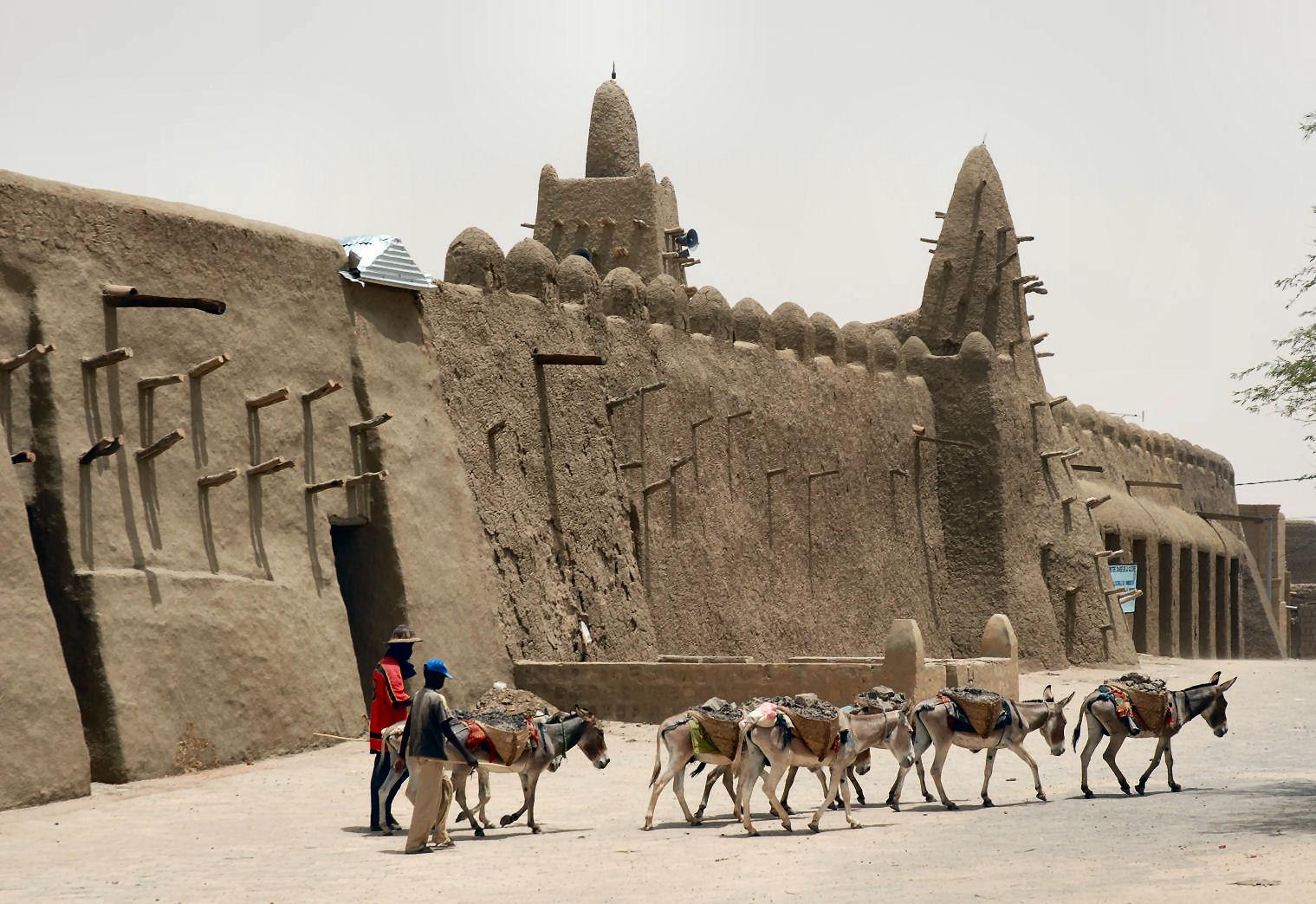 Flickr user: Emilio Labrador Santiago de Chile https://www.flickr.com/people/3059349393/ / CC BY 2.0 (Wikimedia Commons)
Western Africa
 Mali
MaliMali is the heart of West African Islam and culture: Timbuktu's manuscripts, Dogon cliff dwellings, Niger River blues. Currently unstable; check advisories.
✦Timbuktu's 200,000 medieval manuscripts were so treasured that families hid them in walls and buried them during the French occupation.
✦The Mali Empire of the 13th century controlled an area larger than Western Europe.
✦The Niger River is so central to Mali's identity that cities compete for the most poetic names referencing it.
Medieval center of Islamic learning, UNESCO World Heritage site. Currently unsafe for visitors due to armed group activity.

Unique cliff-dwelling villages of the Dogon people, dramatic landscape, and rich cultural traditions. Currently high-risk for travelers.
Mali's premier museum with masks, sculptures, manuscripts, and ethnographic collections.
Mali spans the transition from Sahel grassland to Sahara desert and encompasses some of Africa's most storied landscapes. Timbuktu was a medieval center of Islamic learning; Dogon Country's cliff-dwelling villages are archaeological wonders; the Niger River flows through the country creating a ribbon of life. Bamako's music scene is legendary: blues, mbalax, and traditional griots blend in street bars and concert halls. The country faces serious security challenges from armed groups in the north and center. Much of Mali is off-limits to visitors per Western advisories, though southern regions around Bamako and parts of central Mali remain accessible. The culture is profound: Islamic scholarship, oral history, art, music, and hospitality run deep. Visiting requires careful planning, flexible timelines, and acceptance of uncertainty.
Last checked 26 Jul 2026
Every zone below is rated against a named government advisory and carries the date we last read it. Most of any country is calmer than its headlines.
Avoid all travel
Government of Canada · checked 26 Jul 2026
The entire northern region is under travel advisory warning due to armed group activity, kidnapping risk, and active conflict. The UK, US, and other governments advise against all travel to these regions.
Avoid: Do not travel to Timbuktu, Gao, Kidal, Araouane, or any northern towns.
UK FCDO, US State Department · checked 6 Jul 2026
Central regions including Mopti and Segou have experienced banditry, kidnapping, and inter-communal conflict. Travel is not recommended by most advisories.
Avoid: Exercise extreme caution or avoid the regions of Mopti, Segou, and Kayes.
UK FCDO · checked 6 Jul 2026
Bamako is relatively secure for careful visitors. Street crime occurs; robbery of foreigners is a concern. Avoid night travel, protests, and large gatherings.
Avoid: Avoid traveling alone at night, avoid political demonstrations, avoid the area north of Bamako (Koulikoro region) without local guides.
UK FCDO · checked 6 Jul 2026
The southern border regions are somewhat safer than the center and north but still carry risks. Travel is possible with careful planning and local guides.
UK FCDO · checked 6 Jul 2026
Mali's history is written along one river. The Niger enters the country from the southwest, and instead of running straight to the sea it bends north into the Sahara, spreads into a vast inland delta of channels, lakes and floodplains around Mopti and Lake Debo, then curls back south toward the Gulf of Guinea. That bend is the reason anything else in this story happened. The delta's annual flood, fed by rains falling far away in Guinea, turns semi-desert into grazing and farmland every year with the regularity of a season, and it sits exactly where the Sahara's caravan routes meet the sahel. Everything that follows, the cities, the empires, the gold and the books, grew out of that one piece of hydrology. The oldest of those cities is Djenne-Djenno, a few kilometres from the modern town of Djenne. Excavations led by Roderick and Susan McIntosh found the lowest occupation layers radiocarbon dated to around 250 BC, with the settlement growing into a substantial town by the first centuries AD and reaching its peak size, estimated at several thousand people spread across dozens of linked mounds, between roughly 800 and 1200 AD. That makes it one of the oldest known urban settlements in sub-Saharan Africa, older than the Ghana Empire that later dominated the region. ...
The full history, the peoples, and pieces written by people from hereBamako sprawls along the Niger River, a city of music venues, bustling markets, and a youthful energy that persists despite the country's struggles. Mali is synonymous with musical genius: the kora, the ngoni, and the blues tradition born from griot storytelling flow from radios and street corners everywhere. The Niger River is the lifeblood, and you see it in the rhythms of transport, trade, and daily survival. Timbuktu and Djenné remain magnetic despite accessibility challenges, with their earthen mosques and historic streets conjuring images of centuries-old scholarship. Mali's food is legendary: jollof rice, peanut stew, and fresh-baked bread shared over conversation. The country carries both brilliance and hardship in equal measure, a place where history is immediate and culture is inseparable from survival.
Festivals and moments worth timing a trip around.
A legendary gathering in Timbuktu celebrating Tuareg and North African music, with performers, nomadic peoples, and music lovers converging in the Sahara for days of music and cultural exchange.
The vast market at the foot of Djenné Mosque draws traders and visitors from across the region. Textiles, crafts, and food create one of West Africa's most visually stunning markets.
Bamako celebrates Mali's independence with parades, music, and ceremonies honoring the nation's complex journey and resilience through hardship.
Mali's Muslim majority observes Ramadan with devotion, followed by festive Eid celebrations featuring music, feasting, and communal prayers in neighborhoods and mosques nationwide.
Music, theater, and dance performances celebrate the Niger River and Bamako's cultural vibrancy, with artists performing on stages along the riverbank under the stars.
Before you go
You have the zones as they stand today, and they do move, so when one in Mali changes rating or an advisory we cite is rewritten, we will tell you. That is the only reason we will write.
