Countrywide advisory (Government of Canada)
Exercise increased cautionExercise a high degree of caution (with regional advisories) Regional advisories apply; see the source for zone-level detail.
Government of Canada · checked 26 Jul 2026
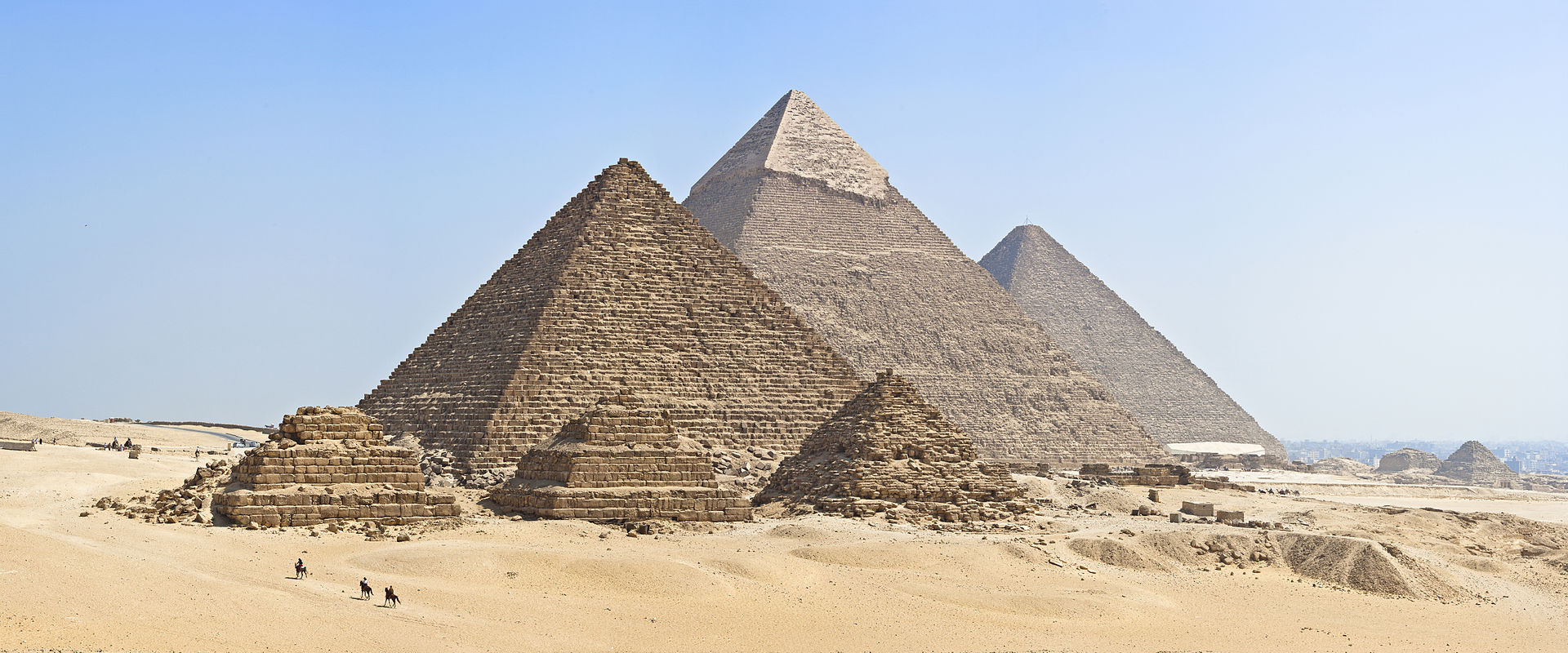 KennyOMG / CC BY-SA 4.0 (Wikimedia Commons)
Northern Africa
 Egypt
EgyptHome to the Pyramids and Nile, Egypt is the gateway to ancient civilization and modern Arab culture.
✦The Great Pyramid of Giza is the only surviving wonder of the Seven Wonders of the Ancient World; built 4,500 years ago with precision that still baffles engineers.
✦Egypt's population of 110 million is crammed into 3% of the land; 95% is uninhabitable desert, making the Nile Valley one of Earth's densest ribbons of civilization.
✦Tutankhamun's tomb was sealed with a curse inscription, undisturbed for 3,300 years, then opened in 1922 to worldwide sensation and genuine mystery.
The Great Pyramids, Sphinx, and 4,500-year-old necropolis on the outskirts of Cairo.

World's premier collection of pharaonic artifacts, from mummies to Tutankhamun's treasure.

Massive pharaonic temples in Upper Egypt with towering pylons, colossal statues, and sanctuaries spanning centuries.
Egypt is defined by the Nile, a ribbon of life through the desert that has sustained civilization for millennia. The country transitions from ancient monuments in the south to the chaos and grandeur of Cairo, to Mediterranean beaches in the north. The culture is layered: pharaonic legacy, Islamic heritage, Arab nationalism, and contemporary street life collide in cities and weave through rural felucca journeys. A first-time Africa visitor often starts here, but the country demands patience with bureaucracy, crowds, and heat.
Last checked 26 Jul 2026
Every zone below is rated against a named government advisory and carries the date we last read it. Most of any country is calmer than its headlines.
Exercise a high degree of caution (with regional advisories) Regional advisories apply; see the source for zone-level detail.
Government of Canada · checked 26 Jul 2026
Strategic zone with militant activity, particularly Sinai Peninsula; significant security concerns.
Avoid: Sinai Peninsula (entire region); Suez city; Eastern Desert beyond main highways.
UK FCDO · checked 6 Jul 2026
Major urban centers with standard city safety concerns; petty crime and congestion are main issues.
Avoid: Avoid demonstrations and large gatherings. Some neighborhoods (east Cairo) are best avoided after dark. Stay away from political rallies.
UK FCDO · checked 6 Jul 2026
Remote desert oases are generally safe but isolated; road conditions can be poor.
UK FCDO · checked 6 Jul 2026
Tourist-heavy regions with heavy police presence and established infrastructure; relatively safe.
UK FCDO · checked 6 Jul 2026
Egypt's deep past sits not in the Nile Valley alone but in the desert around it: at Nabta Playa, roughly 800 kilometres south of Cairo, Neolithic inhabitants who appear to have migrated north out of Sub-Saharan Africa built, around 7500 BCE, a set of megalithic stone alignments now recognised as one of the world's earliest astronomical devices, predating Stonehenge by nearly two thousand years. Only after roughly 4900 BCE, as the surrounding desert dried into its present hyper-arid state, did population concentrate in the Nile Valley and its oases. Out of that concentration grew the Naqada culture, a sequence usually divided into Naqada I, II, and III and dated broadly to 4000 to 3000 BCE, spreading along the Nile from sites such as Hierakonpolis, Abydos, and Naqada itself in Upper Egypt, contemporary with, and closely related to, the A-Group culture of Nubia to the south, a reminder that the earliest Nile civilisation was never purely Egyptian in isolation from its African neighbours. Out of the competing Naqada polities came the pharaonic state, and the Old Kingdom, from roughly 2649 to 2100 BCE, gave Egypt its most famous monuments: Sneferu perfected true pyramid construction, and his successors Khufu, Khafre, and Menkaure raised the pyramids at Giza as tombs for god-kings ruling through a centralised administration built on Nile flood agriculture and grain surplus. ...
The full history, the peoples, and pieces written by people from hereCairo is incomparable: 20 million people compressed into a sprawl of medieval neighborhoods, glittering suburbs, and highways flowing with an impossible choreography of traffic. The city never sleeps, its cafes and streets perpetually alive with argument, commerce, flirtation. The Nile cuts through like a vein of life, and along its banks, ancient temples still command silence and wonder. The economy strains under the weight of the population and recent currency crises, yet resilience runs in the blood. Young Egyptians create, trade, dream, often leaving for the Gulf or Europe. The food scene is its own universe: koshari, falafel, fresh juice stands, mezze that goes on forever. The music, the art, the film industry, the theater: Egypt has always punched above its weight culturally, and that hasn't changed.
Festivals and moments worth timing a trip around.
Africa's oldest film festival draws directors and cinephiles from across the continent to celebrate cinema in a city that has long claimed the mantle of Arab Hollywood.
As the sun aligns with the inner sanctum of Ramesses II's temple, thousands gather to witness a cosmic geometry that the pharaohs engineered over 3,000 years ago.
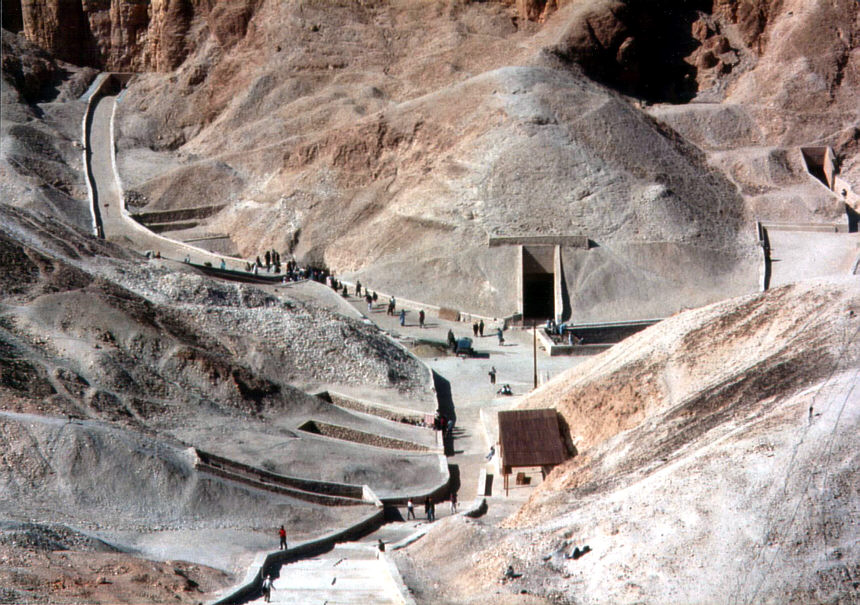
Float above the Valley of the Kings as dawn breaks, seeing Thebes awakening beneath you, a perspective that ancient nobility themselves could only dream of.
The Nile becomes a stage for traditional felucca sailing races, music, dance, and celebrations of the river that has always been Egypt's blood.
Where East and West collided for centuries, contemporary art and performance take over the Mediterranean's most legendary city.
Before you go
You have the zones as they stand today, and they do move, so when one in Egypt changes rating or an advisory we cite is rewritten, we will tell you. That is the only reason we will write.