Countrywide advisory (Government of Canada)
Reconsider travelAvoid non-essential travel (with regional advisories) Regional advisories apply; see the source for zone-level detail.
Government of Canada · checked 26 Jul 2026
 CC BY-SA 3.0 (Wikimedia Commons)
Eastern Africa
 Uganda
The Pearl of Africa, combining lush highland ecosystems, mountain gorillas, the Nile's source, and vibrant urban culture.
✦The source of the Nile is in Uganda, though scientists debated its exact location until the 1860s.
✦Uganda is Africa's youngest nation by population: 78% of 48 million people are under 30 years old.
✦The Mountain Gorilla, found only in Uganda, Rwanda, and Congo, is Uganda's most iconic wildlife; fewer than 500 remain.
Dense montane forest protecting half of the world's remaining mountain gorillas; gorilla trekking is the primary draw.

Africa's second-highest mountain range (Margherita Peak, 5,109m) with snow-capped peaks, alpine lakes, and montane ecosystems.
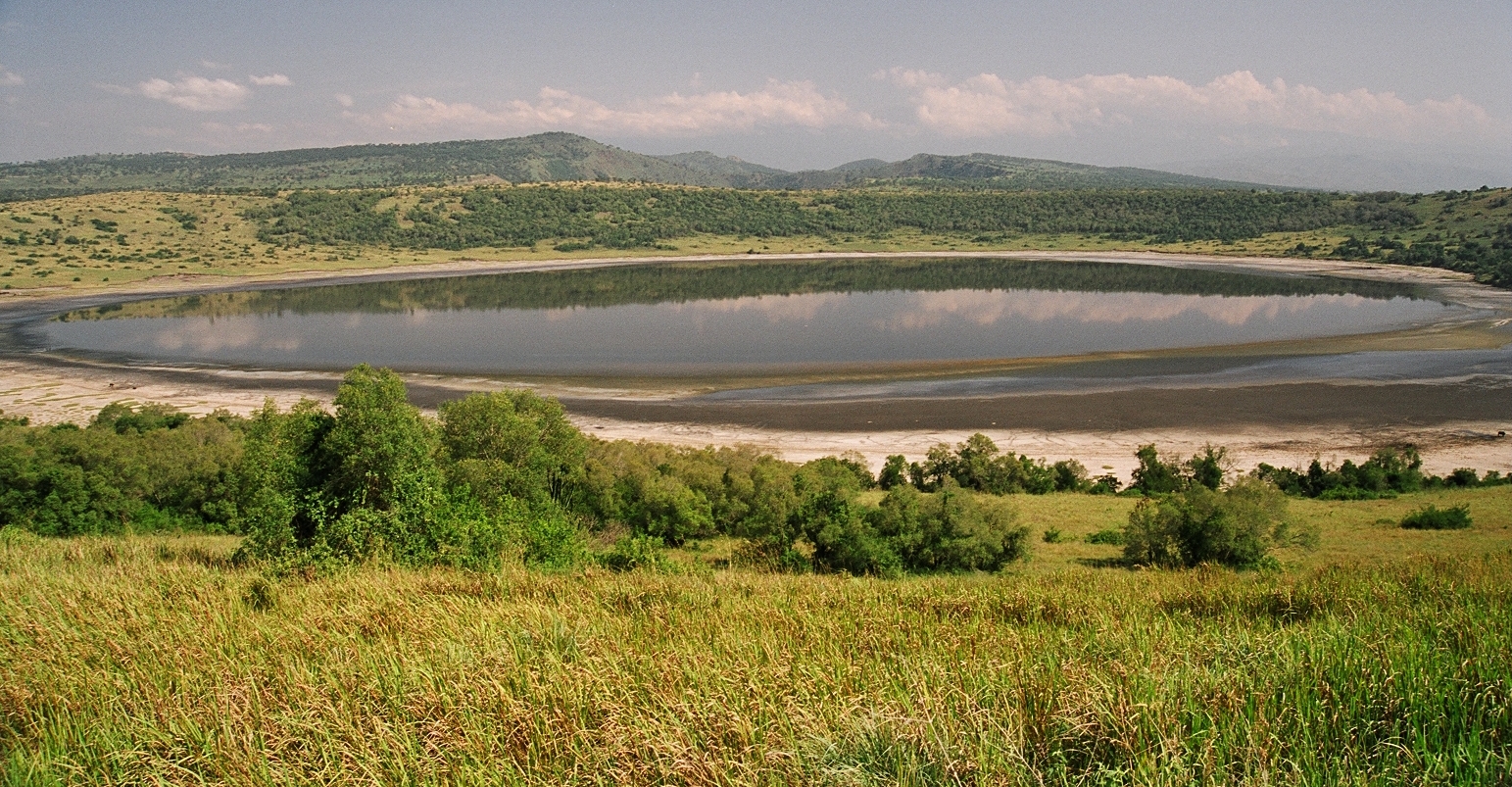
Large savanna reserve with diverse wildlife, crater lakes, and the Kazinga Channel offering boat safaris and birding.
Uganda straddles the equator and encompasses high altitude forests (particularly in the southwestern highlands), vast lake systems (Victoria, Kyoga, Albert), the Nile River in multiple manifestations, and savanna grasslands. Ecologically, it is one of Africa's richest countries, supporting great ape populations (mountain gorillas, chimpanzees), diverse bird life, and intact forest ecosystems. Culturally, Uganda is home to over 50 ethnic groups with distinct languages, kingdoms, and traditions. The capital, Kampala, thrums with East African urban energy; musical traditions (including reggae and Afrobeat) are deeply embedded. A visit combines adventure (gorilla trekking, whitewater rafting, climbing), natural history, and urban cultural immersion.
Last checked 26 Jul 2026
Every zone below is rated against a named government advisory and carries the date we last read it. Most of any country is calmer than its headlines.
Avoid non-essential travel (with regional advisories) Regional advisories apply; see the source for zone-level detail.
Government of Canada · checked 26 Jul 2026
Kampala is bustling and generally safe in daytime and established commercial areas. Petty crime (pickpocketing, bag snatching) is common; avoid isolated areas at night. Violent crime affecting tourists is rare.
Avoid: Certain suburbs (Nansana, Kawempe) after dark; isolated green spaces at night
UK FCDO, US State Department · checked 6 Jul 2026
Bwindi Impenetrable National Park and surrounding areas are secure and well-managed by tourism operators. Community presence is strong; infrastructure is tourism-focused.
UK FCDO · checked 6 Jul 2026
Northern Uganda (Gulu, Lira regions) has recovered significantly since conflict ended in 2006. Tourism is limited but security has improved substantially. Advisories emphasize caution but not restriction.
UK FCDO · checked 6 Jul 2026
Long before any kingdom took shape here, the forests and papyrus swamps around the great lakes were home to Batwa hunter-gatherers, whose descendants still live at the edges of Bwindi and the Virunga foothills. Bantu-speaking farmers moved into the Lake Victoria basin from around 200 BC, carrying iron-smelting and settled agriculture with them, and from roughly the fifteenth century Nilotic pastoralist groups pushed south from the Nile valley into the north and east, becoming the ancestors of the Karamojong, the Iteso and the Acholi. Out of that mixing, between about 1000 and 1500 AD, oral tradition places a dynasty of demigod rulers called the Bachwezi, credited with founding the Bunyoro-Kitara kingdom across central and western Uganda and into northern Tanzania. What survives of that world in the ground is real even where the demigods are not. The earthworks at Bigo bya Mugenyi, a network of ditches and berms covering ten square kilometres, some cut six kilometres long and up to four metres deep, form the largest ancient monument in the country, and radiocarbon dates from the site cluster in the thirteenth to fifteenth centuries, broadly matching where oral tradition places the Chwezi period. ...
The full history, the peoples, and pieces written by people from hereKampala sprawls across hills with energy and disorder; nightlife thrives, music venues pulse, and young professionals build businesses. The city is loud, crowded, and alive. Outside the capital, the landscape transforms: lush forests, mountains, the Great Lakes, and thousands of villages connected by red earth roads. The Ugandan people are warm, direct, and entrepreneurial; the economy grows steadily; education and healthcare improve. Daily life is vivid: matoke (plantains), Rolex (meat in chapati, not the watch), live music everywhere, and a rhythm that feels both African and uniquely Ugandan. There's an optimism here that wasn't visible a generation ago.
Festivals and moments worth timing a trip around.
Ugandan and international theater companies perform; the festival showcases contemporary and traditional performance in venues across the city.
Parades, performances, and celebrations mark the nation's freedom; cultural troupes perform traditional dances; flags fill the streets.
An electronic music festival on the Nile islands that blends cutting-edge sounds with African rhythms; it's evolved into a genuinely influential cultural event.
The historic gardens host music and cultural events; performances happen amid manicured plants and lakeside views; the atmosphere is refined and relaxed.
Muslim communities across Uganda gather for prayers and celebrations; families feast and exchange gifts; the energy is joyful and communal.
Before you go
You have the zones as they stand today, and they do move, so when one in Uganda changes rating or an advisory we cite is rewritten, we will tell you. That is the only reason we will write.
