Countrywide advisory (Government of Canada)
Exercise increased cautionExercise a high degree of caution (with regional advisories) Regional advisories apply; see the source for zone-level detail.
Government of Canada · checked 26 Jul 2026
 Earth Science and Remote Sensing Unit, NASA Johnson Space Center / Public domain (Wikimedia Commons)
Eastern Africa
 Mozambique
A vast southern African nation with 2,500km of coastline, Bazaruto Archipelago coral gardens, and Gorongosa wildfire restoration creating new wildlife corridors.
✦Mozambique's flag is the only national flag featuring an AK-47, symbolizing the armed struggle for independence.
✦The country has over 2,500 km of coastline and some of Earth's least disturbed coral reefs, attracting divers from across the globe.
✦Lake Niassa, shared with Tanzania and Malawi, contains cichlid fish found nowhere else on Earth.
Marine sanctuary of six islands with pristine reefs, diving, whale sharks (seasonal), and rare sea cows.
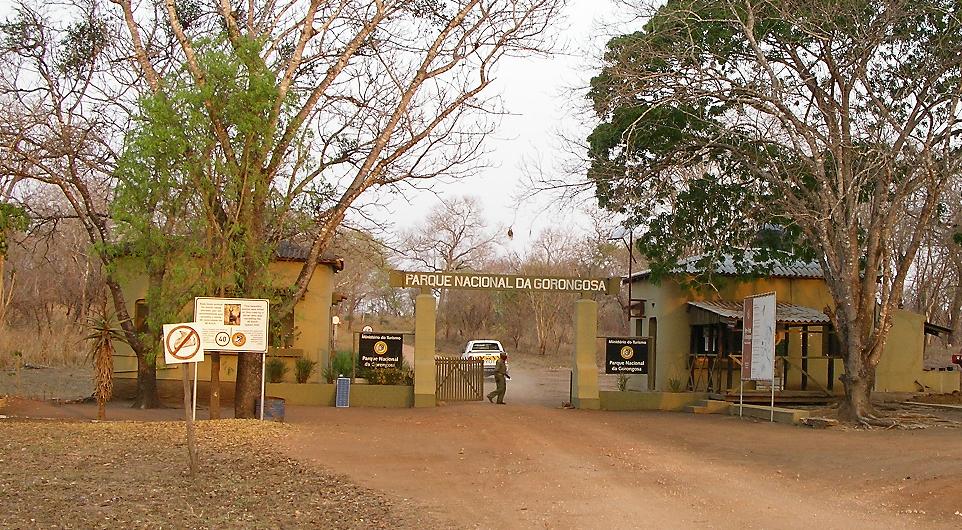
Massive (5,600 sq km) park undergoing wildlife restoration, with elephants, buffalo, and emerging biodiversity.

Massive coastal dunes and wild sandy islands in Gaza Province, among Africa's most remote beaches.
Mozambique stretches 2,500km along the Indian Ocean, with terrain ranging from pristine beaches and archipelagos to inland savanna and miombo woodland. The north offers relative security and untouched islands; the far north (Cabo Delgado) has been marked unsafe. The south includes Maputo (capital), Gaza Province (wild and remote), and the Bazaruto islands (coral and marine sanctuary). The culture is primarily Bantu with strong Portuguese colonial influence in language and architecture. Traditional communities practice fishing, cultivation, and pastoralism. After the civil war (ended 1992), the nation has rebuilt, though infrastructure remains basic and services uneven outside the capital. A trip feels like arriving in a frontier nation: raw edges, minimal tourism infrastructure, vast empty spaces, and authentic encounters. Roads are rough; travel times are unpredictable. Yet the rewards include empty beaches, pristine reefs, and a sense of discovery unavailable in more developed destinations.
Last checked 26 Jul 2026
Every zone below is rated against a named government advisory and carries the date we last read it. Most of any country is calmer than its headlines.
Exercise a high degree of caution (with regional advisories) Regional advisories apply; see the source for zone-level detail.
Government of Canada · checked 26 Jul 2026
Northern Cabo Delgado province has active militant insurgency causing violence, displacement, and security operations.
Avoid: Entire Cabo Delgado province north of Pemba. Do not travel to Palma, Mocímboa da Praia, or surrounding areas.
UK FCDO · checked 6 Jul 2026
Capital and southern provinces (Gaza, Inhambane) are safe for travel with normal precautions. Petty theft exists in Maputo.
Avoid: Avoid isolated areas of Maputo after dark. Do not travel alone in Gaza Province without a guide.
UK FCDO · checked 6 Jul 2026
Sofala, Beira, and central coast are safe for travel; minimal tourism infrastructure. Avoid Dondo (unstable).
Avoid: Do not travel inland from central coast without security briefing.
UK FCDO · checked 6 Jul 2026
Islands and southern beaches are safe, well-touristed, and secure. Marine life is the only 'risk'.
UK FCDO · checked 6 Jul 2026
Long before Portugal or Arabia touched this coast, Bantu speaking farmers moving out of west-central Africa reached Mozambique from around the third century CE, carrying iron smelting and mixed farming with them. One branch pushed east to the Indian Ocean, another moved south into the Zimbabwe plateau and its western Mozambican fringe. Britannica traces the growth of extended patrilineal households into larger groupings called nyika by the end of the first millennium, the political unit that fed into the trading states of the interior. The dating is not settled: archaeologists read Iron Age slag deposits and pottery styles across Malawi and Mozambique as evidence of a rapid third and fourth century dispersal, while geneticists studying modern Mozambican populations note that the migration remains under documented, since sampling along this stretch of coast is still thin. The routes in any history of this period are a reconstruction, not a fixed record. By the tenth century that interior world was plugged into the Indian Ocean. Sofala, on the central coast, grew from a trading post into the outlet for the gold of Great Zimbabwe, reached via the Buzi River and the market town of Manica. ...
The full history, the peoples, and pieces written by people from hereMozambique pulses with unfinished energy. Maputo sprawls with tin-roof neighborhoods and colonial architecture crumbling beautifully; the waterfront feels alive with music and street markets selling everything. Outside the capital, the beaches are pristine, the diving world-class, and the wildlife returns slowly to protected areas. The economy grows steadily; gas reserves promise wealth, if not yet delivered. Daily life is loud and colorful: minibus taxis painted in wild designs, markets exploding with tropical fruit, peri-peri chicken sizzling on every corner. There's an ease here, a lack of rush, and a warmth to strangers that feels earned from having endured.
Festivals and moments worth timing a trip around.
Parades, concerts, and celebrations mark the nation's freedom; Maputo comes alive with music, flags, and speeches that remind everyone what independence cost and what it meant.
African and international musicians converge in Maputo for a week of performances on outdoor stages, a cultural collision that showcases the country's creative soul.
Coastal communities celebrate fishing and marine culture with boat races, seafood feasts, and traditional music that echoes the Indian Ocean's rhythms.
A showcase of the southern region's crafts, agriculture, and culture; local artisans display work, traditional dances fill stages, and the atmosphere is deeply rooted and welcoming.
Artisans from across the region gather to display handmade goods, textiles, and art; live performances and food create a vibrant, intimate celebration of local creativity.
Before you go
You have the zones as they stand today, and they do move, so when one in Mozambique changes rating or an advisory we cite is rewritten, we will tell you. That is the only reason we will write.
