Countrywide advisory (Government of Canada)
Do not travelAvoid all travel
Government of Canada · checked 26 Jul 2026
 joepyrek from Richmond, Va, USA / CC BY-SA 2.0 (Wikimedia Commons)
Northern Africa
 Libya
LibyaSaharan nation with vast Roman ruins, Mediterranean coast, and complex recent history; limited tourism infrastructure.
✦Leptis Magna, a 2,000-year-old Roman city on the coast, is one of the best-preserved classical sites in the Mediterranean, rivalling Pompei for architectural integrity.
✦The Sahara's ergs around Ubari contain fossilized wrecks of ancient shipwrecks in what was once an inland sea, now bone-dry dunes.
✦Libya's coast served as the base for Barbary pirates who raided Mediterranean shipping for 400 years; Thomas Jefferson's Marines fought them in Tripoli.
World-class Greco-Roman city with theater, forum, and seaside monuments; exceptionally preserved.
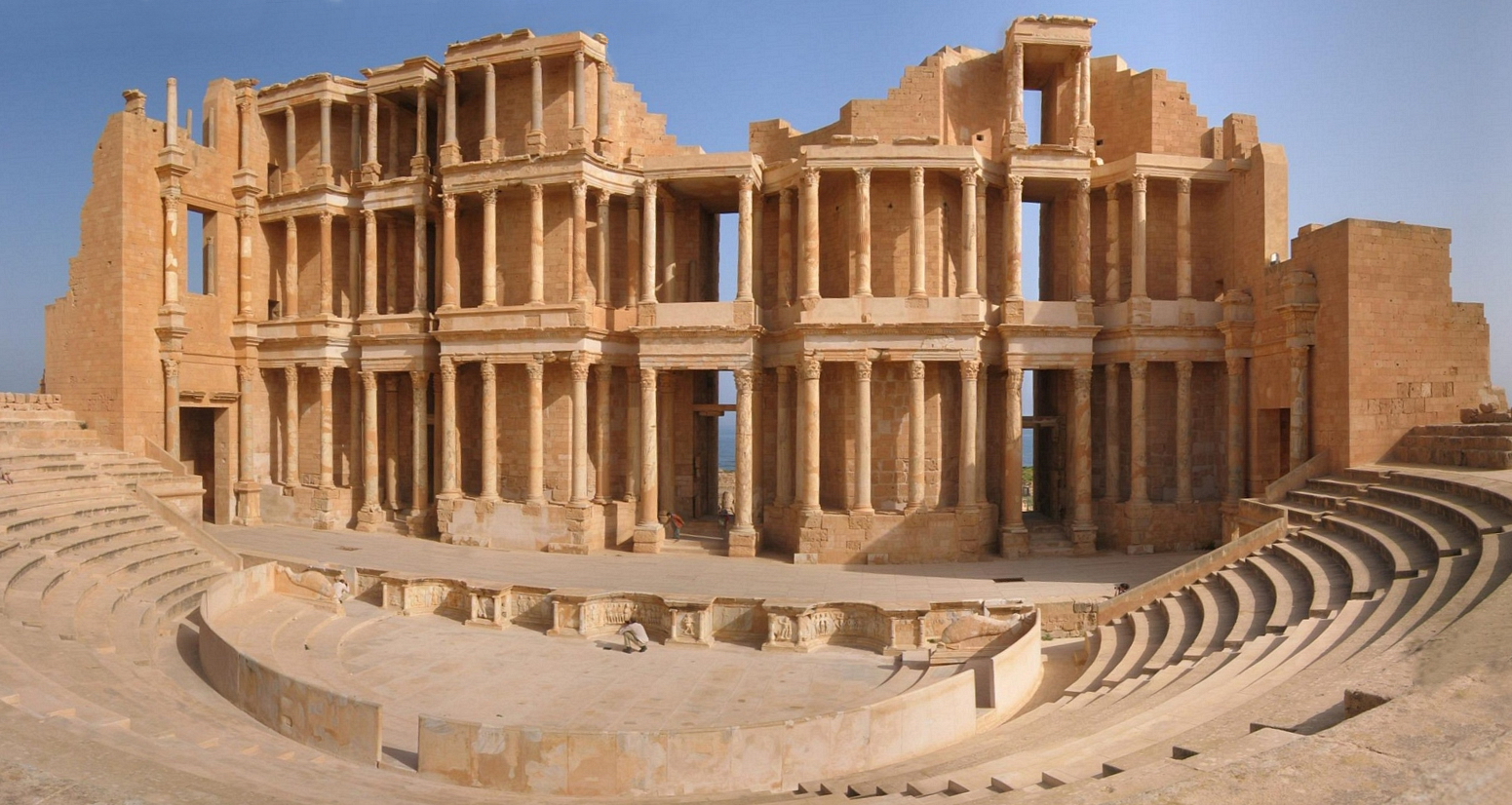
Smaller but striking Roman port town with a three-tier theater and temples on the coast.

Historic walled city center with Ottoman architecture and the Assaraya al-Hamra fortress museum.
Libya spans the Libyan Sahara, one of North Africa's least populated regions. The northern coast has Mediterranean ports and small cities; the interior is vast sand and rock. Roman heritage is extraordinary, with Leptis Magna and Sabratha ranking among the world's best-preserved Greco-Roman sites. However, Libya has faced decades of conflict and political instability, limiting tourism and visitor access. The country remains largely closed to independent travelers; organized tours with security escorts are necessary. Cultural encounters with Libyans are warm, but logistical and safety challenges are significant.
Last checked 29 Aug 2026
Every zone below is rated against a named government advisory and carries the date we last read it. Most of any country is calmer than its headlines.
Avoid all travel
Government of Canada · checked 26 Jul 2026
Advisories disagree here, and the disagreement is worth knowing. The FCDO carves Tripoli out of Libya's blanket do-not-travel line and rates it advise against all but essential travel, alongside Misrata, reflecting relatively more stable conditions in the capital than elsewhere. The US, Canadian and Australian governments do not recognise that distinction and rate Tripoli do-not-travel, citing repeated clashes between rival armed groups, the risk of arbitrary detention and kidnapping aimed at foreign nationals. A visit goes against the advice of three of those four governments, which is why it is listed at the higher risk level here.
Avoid: Militia checkpoints and any area of recent clashes between rival armed groups
UK FCDO, US State Department, Global Affairs Canada and Smartraveller · checked 29 Aug 2026
The FCDO's essential-travel exception also covers Benghazi, Al-Bayda and Derna, the Jebel Akhdar area, and the coastal and desert roads between Al-Maqrun and Al-Tamimi in both directions, again as a carve-out from an otherwise do-not-travel country. The US, Canadian and Australian advisories treat the same cities as straight do-not-travel, given the history of factional fighting and terrorist attacks. Derna also carries a standing flood risk following the dam failure of 2023, which is separate from the security picture.
Avoid: Areas of recent or ongoing fighting in and around Benghazi, Al-Bayda and Derna
UK FCDO, US State Department, Global Affairs Canada and Smartraveller · checked 29 Aug 2026
The FCDO names Fezzan as having the greatest concentration of terrorist groups in Libya, with fighters able to move relatively freely between towns in the region to plan attacks elsewhere in the country, and bomb attacks on Libyan security forces have been claimed here as recently as 2021. Landmines and unexploded ordnance left from years of fighting remain a hazard even where active conflict has died down, which makes unmarked ground dangerous regardless of the current security situation.
Avoid: Sabha and the wider Fezzan interior, and any unmarked or previously contested ground because of landmines
UK Foreign, Commonwealth and Development Office · checked 29 Aug 2026
Global Affairs Canada singles out these border zones as especially dangerous, with bandits, armed groups and transnational criminal networks operating with little state control and a very high kidnapping threat to foreigners, and describes the Algerian border as effectively closed to travellers. The danger sits in the crossing corridor itself, so it applies regardless of which direction a traveller is moving and regardless of the conditions on either side.
Avoid: All overland border crossings with Algeria, Niger, Chad and Sudan
Government of Canada · checked 29 Aug 2026
Global Affairs Canada warns specifically against this stretch because of fighting between rival factions and a risk of kidnapping by extremist groups, even though it is the main overland route toward the capital. Road risk in Libya is not uniform along the coast: the FCDO treats a different coastal and desert segment further east, between Al-Maqrun and Al-Tamimi, as part of its essential-travel carve-out rather than as a blanket no-go, so the specific stretch matters more than the general label of the coastal road.
Avoid: The Zawiyah to Tripoli road corridor
Government of Canada · checked 29 Aug 2026
Long before Rome or Carthage laid claim to this coast, the land was Amazigh, its indigenous Berber peoples farming the coastal plains and ranging the desert interior in patterns older than any written record of the region. The deepest of Libya's inland stories belongs to the Garamantes, a Saharan civilisation historians have only reconstructed in real detail over the past few decades. Centred on Germa in the Fezzan, they built a kingdom spanning roughly 180,000 square kilometres of desert, sustaining farms and towns of several thousand people on water drawn from fossil aquifers through foggara: underground channels, reckoned in aggregate at around 3,000 miles, fed and kept flowing by a network of some 100,000 vertical maintenance shafts sunk at intervals across the Fezzan, a few of them more than thirty metres deep. It let a genuinely urban society exist in the middle of the Sahara without a river to support it, something almost nowhere else in the ancient world managed, and the kingdom held that ground for centuries before the aquifers it depended on began to run low. The Garamantes were heirs to an even older world. In the Acacus mountains, in the far southwest, rock walls and shelters carry paintings and engravings dated from around 12,000 BCE to the early centuries CE, showing giraffes, elephants, cattle, and the people who lived alongside them. ...
The full history, the peoples, and pieces written by people from hereLibya is difficult to visit and complicated to understand. Tripoli and Benghazi are cities trying to rebuild amid political fragmentation, their streets carrying the scars of recent conflict but also the determination of people who want normalcy and commerce to flow again. The economy has been hollowed by war and oil dependence, and security concerns keep most tourists away. Yet for those who can navigate the complexity, Libya reveals ancient Roman ruins at Leptis Magna and Sabratha that rival anywhere in the Mediterranean, and the Sahara's wild beauty stretches inland forever. The Libyan people are warm, curious about the wider world, hungry for stability. The country sits at a crossroads between Africa and the Mediterranean, between Arabic and Berber identity, between its revolutionary past and an uncertain future.
Festivals and moments worth timing a trip around.
Among the best-preserved Roman ruins on Earth, concerts and cultural events celebrate Libya's Mediterranean heritage in a setting of imperial grandeur that seems frozen in time.
In the Sahara's most beautiful oasis town, with its distinctive Berber architecture and underground passageways, celebrations bring traditional music and culture to life.
Across Libya, the end of Ramadan brings three days of family gatherings, markets exploding with celebrations, and the streets alive with joy and feasting.
Military parades, cultural performances, and public celebrations mark the date that transformed Libya into a continental player in Arab politics.
Before you go
You have the zones as they stand today, and they do move, so when one in Libya changes rating or an advisory we cite is rewritten, we will tell you. That is the only reason we will write.