Countrywide advisory (Government of Canada)
Reconsider travelAvoid non-essential travel (with regional advisories) Regional advisories apply; see the source for zone-level detail.
Government of Canada · checked 26 Jul 2026
 Sailko / CC BY 3.0 (Wikimedia Commons)
Eastern Africa
 Ethiopia
Africa's oldest independent nation with ancient Christian traditions, dramatic highland scenery, unique cultural heritage, and a complex contemporary security landscape requiring careful regional assessment.
✦Ethiopians use a calendar thirteen months long; their New Year falls in September (Gregorian), making them perpetually behind.
✦Lalibela's monolithic churches were carved downward into bedrock, not built upward; each is a single stone hollowed into devotion.
✦Lucy, our oldest human ancestor walking Earth 3.2 million years ago, was discovered in Ethiopia's Afar region.
UNESCO World Heritage site with 11 unique churches carved from single rock blocks, arranged as a spiritual pilgrimage landscape.
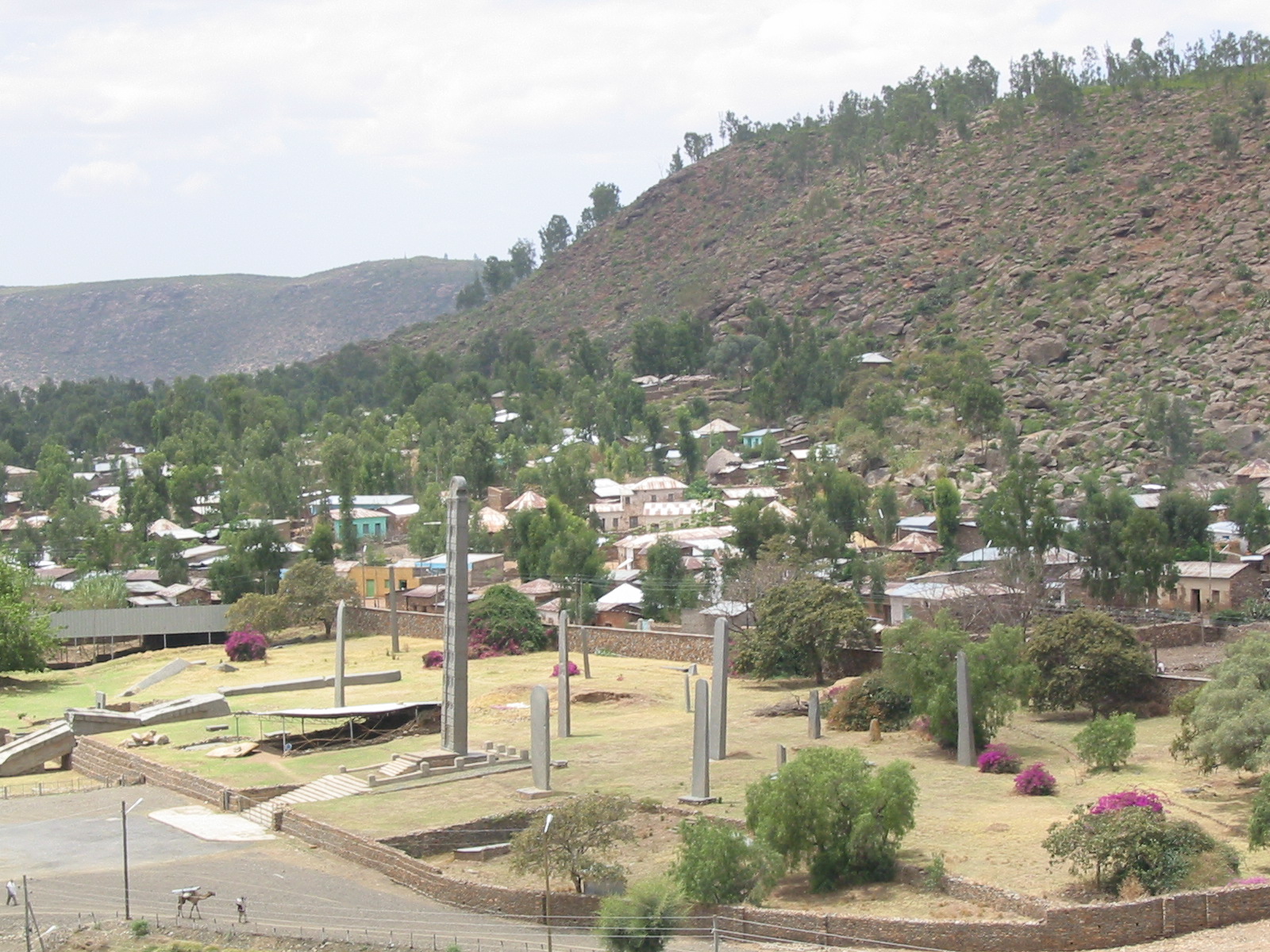
Ancient capital of the Axumite Empire with towering stelae, churches, and tombs from Ethiopia's first kingdom.

Dramatic highland park with endemic wildlife, including the rare Walia ibex and gelada baboons, spectacular trekking routes.
Ethiopia occupies the Horn of Africa with varied topography: the Ethiopian Highlands (the 'Roof of Africa') reach over 4,600 meters, while the lowlands descend to the Danakil Depression. The nation is linguistically and ethnically diverse with over 80 groups; Amharic (Ge'ez script) is the lingua franca. The culture blends ancient Orthodox Christianity, Islamic traditions, and indigenous beliefs. Addis Ababa is Africa's diplomatic capital, home to the African Union. A trip to Ethiopia encounters world-class archaeological sites (Axum, Lalibela, Gondar), stunning trekking (Simien Mountains), and vibrant contemporary music and art scenes. However, security varies significantly by region: northern regions (Tigray, Amhara) experienced recent conflict; the south and central highlands are generally stable; eastern lowlands have pastoralist areas with occasional banditry. Careful regional assessment is essential before travel.
Last checked 26 Jul 2026
Every zone below is rated against a named government advisory and carries the date we last read it. Most of any country is calmer than its headlines.
Avoid non-essential travel (with regional advisories) Regional advisories apply; see the source for zone-level detail.
Government of Canada · checked 26 Jul 2026
The Danakil Depression (Afar region) has significant tourism but requires caution. The Somali region has higher banditry risks and is generally not recommended.
Avoid: Somali Region: substantial banditry and armed conflict risks. Eastern Afar: requires experienced guides and 4WD; accessible but challenging.
UK FCDO · checked 6 Jul 2026
The capital and surrounding highlands are generally safe. Urban crime (theft, scams) exists but is manageable with standard precautions. Tourist infrastructure is well developed.
Avoid: Avoid Merkato district late at night. Some neighborhoods see higher theft; use registered taxis or ride-hailing apps.
UK FCDO · checked 6 Jul 2026
The classic tourist route through historical sites is increasingly accessible but security remains variable. Check current advisories before planning northern travel.
Avoid: Tigray Region experienced armed conflict 2020-2022; peace is fragile. Amhara Region has had recent unrest. Travel to Tigray is not currently recommended for tourists.
UK FCDO · checked 6 Jul 2026
The iconic trekking destination is generally safe but remote. Armed bandits have historically targeted trekkers; use licensed guides and registered tour companies.
Avoid: Trek only with established tour companies; avoid independent trekking due to robbery risks.
UK FCDO · checked 6 Jul 2026
The south is generally stable. Tourist sites like Arba Minch, Hawassa, and the Omo Valley are accessible. Local guides are beneficial.
Avoid: Remote pastoral areas in the Lower Omo Valley require experienced guides due to rough terrain and occasional banditry. Communal conflicts between pastoralist groups can flare.
UK FCDO · checked 6 Jul 2026
The oldest ground here runs in millions of years rather than centuries. In 1974 Donald Johanson found the skeleton the world calls Lucy at Hadar, in the Afar Triangle: a partial Australopithecus afarensis about 3.2 million years old, then the most complete early hominin found. Her small skull sat above legs built for upright walking, showing that bipedalism came before the larger brain and reversing an old assumption about how humans became human. Two decades later, nearby in the Middle Awash, Tim White's team found an older and more complete skeleton, Ardipithecus ramidus, dated to 4.4 million years and nicknamed Ardi. Ardi mixed upright and arboreal traits in a wooded habitat rather than open savanna, undercutting the theory that upright walking evolved on open grassland. Neither fossil proves Ethiopia is where humanity began, but both show that this stretch of the Rift Valley holds an unusually legible record of it. Long before that record was legible to science, the northern Horn was already a name in someone else's ledger. Egyptian inscriptions from the Fifth Dynasty, in the twenty-fifth century BC, record expeditions to a place called Punt for gold, resins, ivory and ebony, and Queen Hatshepsut's temple reliefs record her own voyage there. Punt's location, debated between Somalia, Eritrea and the Ethiopian Horn, is less settled than the trade itself. ...
The full history, the peoples, and pieces written by people from hereAddis Ababa rises at eight thousand feet, a sprawling, vibrant capital where new tower blocks stand beside traditional markets, where minibuses navigate chaotic streets, and where young people build tech startups and art collectives. The city has energy and chaos in equal measure: markets overflowing with goods, music venues alive every night, restaurants serving Ethiopian food that is among Africa's finest. The people are friendly, the coffee culture is profound (the birthplace of coffee itself), and the sense of national pride is palpable. Beyond Addis, Ethiopia is incredibly diverse: the Simien Mountains with dramatic escarpments, Lalibela's ancient rock churches, the Rift Valley with lakes and hot springs, pastoral lowlands, and cities like Axum that vibrate with historical weight. The music scene is globally respected; the literature is deep; the culture is unmistakably itself. Ethiopia feels like a nation at a threshold.
Festivals and moments worth timing a trip around.
Orthodox Christian celebration of Christ's baptism with processions of priests in ornate vestments, water blessings, singing, and joyful communal festivities. One of Ethiopia's most important religious and cultural events.
Festival honoring the discovery of the true cross with bonfires burning across the nation, ceremonial processions, traditional songs, and feasting. A deeply spiritual and celebratory occasion.
Contemporary arts festival in the capital celebrating Ethiopian and African musicians, dancers, filmmakers, and visual artists. Multiple stages, exhibitions, cultural dialogue.
Spiritual journey to Lalibela's rock churches to witness ancient Orthodox Christian ceremonies, meet pilgrims from across Ethiopia, and experience faith and architecture in profound unity.
Celebration of Ethiopia's legendary jazz and traditional music traditions with live performances by renowned musicians, cultural workshops, and the nation's global musical influence.
Before you go
You have the zones as they stand today, and they do move, so when one in Ethiopia changes rating or an advisory we cite is rewritten, we will tell you. That is the only reason we will write.
