Issaalso Ciise Somali, Isse; a Dir-lineage Somali clan and the country's largest single group
Djibouti City and the southern and eastern lowlands: Ali Sabieh, the corridor toward Ethiopia and Somaliland, and the border crossing at Loyada · Somali, French, Arabic · No Djiboutian census has ever recorded clan or ethnicity. The CIA World Factbook's standing estimate puts the combined Somali population, Issa plus the smaller Gadabuursi and Isaaq, at 60 percent, which against the 1,066,809 counted in the 2024 census works out to roughly 640,000. Within that total the Issa are consistently described as the largest single clan, but no verified Issa-only figure exists because the state does not publish one.
The Issa are the historically dominant Somali clan of southern Djibouti, organised around the diya-paying lineage system and xeer customary law that still settles disputes over pasture, marriage and compensation in parallel with the formal courts. Sunni Islam structures daily life, with Friday prayers, Ramadan and the two Eids observed with the same weight as elsewhere in the Somali world. Oral poetry remains a living political and social medium, and clan elders are consulted before major family decisions. Khat chewing in the afternoon is a near-universal male social institution, structuring the working day around its import flights from Ethiopia. Weddings involve extended bridewealth negotiation between lineages and days of communal feasting.
Visiting: Dress modestly, with women covering shoulders and knees, and a headscarf appreciated outside the capital's more cosmopolitan quarters. Ask before photographing people, particularly women and elders. Avoid scheduling meetings or expecting brisk service during the mid-afternoon khat hours. Do not raise the Issa and Afar political rivalry as casual conversation, since it is the country's most sensitive fault line. Accept tea or food offered in a home rather than declining outright, and greet elders before younger people in any group.
Afaralso Danakil, Adali, Qafar; historically called the Adal in the south
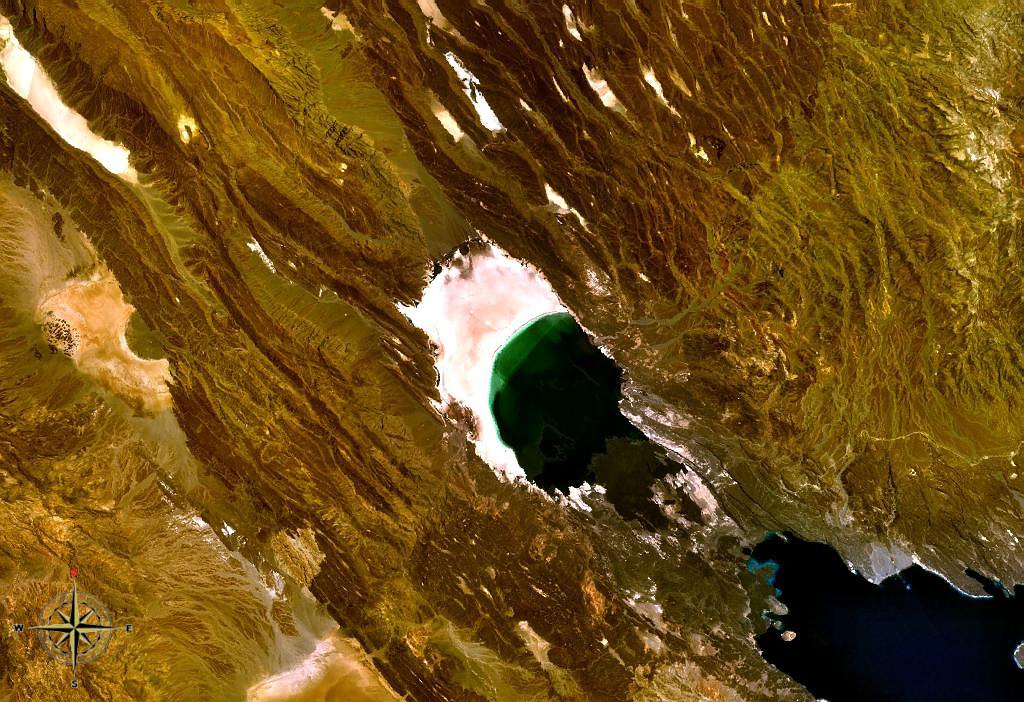
Tadjourah and Obock regions, the Gulf of Tadjoura coast, and the Lake Assal and Lac Abbe depressions in the northern and western interior · Afar · The Factbook's estimate of 35 percent implies roughly 373,000 Afars against the census total of 1,066,809, but that is an extrapolation rather than a census figure, since Djibouti does not ask about ethnicity. Separately, ethnographic sources put the Afar population inside Djibouti at approximately 306,000 out of a wider cross-border population of about 3,350,000 spread across Ethiopia, Eritrea and Djibouti. The two estimates are independent but roughly consistent, and neither is a verified head count.
The Afar are a historically pastoral and salt-trading people of the Danakil Depression, one of the hottest inhabited places on earth, and their caravans still carry slabs of salt cut from Lake Assal by camel to highland Ethiopian markets, a trade that predates the Djiboutian state itself. Clan authority runs through councils of elders rather than through a single chief, and Islam coexists with older customary codes governing bloodwealth and marriage. The curved Afar dagger, the jile, is a traditional male accessory carried as much for status as for use. Afar identity is explicitly transnational, since kinship, marriage and grazing rights run across the borders with Ethiopia and Eritrea without much regard for the lines themselves, and the same lineages appear in all three states.
Visiting: Rural Afar areas expect visible respect for age hierarchy, so greet the oldest person present first. Photography of women, salt caravans or homes requires explicit permission rather than merely the absence of a refusal. Accept food and water generously, since hospitality in the Danakil's terrain is a serious obligation rather than a formality and refusing it can read as an insult. Given the history of conflict with the state, avoid framing questions about the civil war or current political representation as though the outcome were settled and beyond dispute.
Gadabuursialso Gadabursi, Samaroon; a Dir-lineage Somali clan distinct from the Issa
Dikhil Region and the western border zone adjoining Somaliland's Awdal region, with settlement overlapping Issa communities · Somali · No census breakdown exists. A frequently repeated estimate, traceable to Somaliland-oriented sources rather than to any Djiboutian statistical body, puts the Gadabuursi at 15 to 20 percent of the population. That figure should be treated as a clan-interest estimate rather than a verified count, and it is difficult to reconcile with the Issa's own claim to demographic dominance inside the same Somali total.
The Gadabuursi trace descent through the Dir clan family, the same broad lineage as the Issa, but constitute a politically and socially distinct group with their own elders, xeer customary law and marriage networks centred on the historic trading corridor between Zeila, Borama and Djibouti. Historically combining pastoralism with settled agriculture and cross-border trade more than the more mobile Issa, Gadabuursi communities in Djibouti maintain close family and commercial ties to Awdal region in Somaliland. Sunni Islam and Somali oral poetry are shared with the country's other Somali clans.
Visiting: Standard Somali courtesies apply: modest dress, permission before photographs, and respect for elders in any gathering. Do not assume a Gadabuursi identity is the same as an Issa one, since conflating Somali clans is a common and noticed error. Business and family introductions carry weight here, so an introduction through a known contact opens doors a cold approach will not.
Isaaqalso Isaq; in Djibouti predominantly the Habr Awal and Sacad Muuse lineages
Ali Sabieh Region and urban neighbourhoods of Djibouti City, close to the Somaliland border · Somali · No official breakdown exists. Circulated estimates, again largely from Somaliland-oriented sources, place the Isaaq at 13 to 20 percent of the population. As with the Gadabuursi figure, this is not corroborated by any Djiboutian government or UN publication and should be read as a contested clan-advocacy estimate rather than as fact.
Isaaq communities in Djibouti are closely tied by clan, trade and family to Somaliland immediately across the border, and many households maintain active commercial and remittance links to Hargeisa and Borama. Urban and commercially oriented relative to some pastoral Somali clans, Isaaq residents are prominent in Djibouti City's transport, retail and cross-border trucking. Xeer arbitration, Sunni Islam and Somali oral poetry are shared with the country's other Somali communities, while Isaaq political identity remains bound up with Somaliland's unrecognised independence, a subject many will have a strong view on.
Visiting: Treat the Isaaq as clan-distinct from the Issa and do not use the names interchangeably. Somaliland's political status is a live and sometimes personal subject, so let residents raise it rather than opening with it. General Somali etiquette applies: modest dress, consent before photographing, and deference to elders.
Arab and Yemeni merchantsalso Djiboutian Arabs, Yemeni-Djiboutians; the established trading families, distinct from post-2015 Yemeni war refugees
Djibouti City, concentrated historically in the commercial districts near the old port · Arabic, French · The Factbook groups Arabs with French, Ethiopian and Italian residents in a residual category of 5 percent, while other sources cite Arabs at roughly 6 percent on their own. Neither figure comes from a census. Historically the community was far larger relative to the city's size: by 1927, colonial-era records show Yemeni-origin residents made up about 45 percent of Djibouti City's population and owned roughly 90 percent of its shops and 80 percent of its buildings.
This community descends from Yemeni labourers, sailors and merchants recruited from the early 1900s onward to build and run the colonial port, and it retains a distinct legal and social position from later Yemeni war refugees, since many hold renewable foreign-worker residence permits rather than citizenship, a status some families deliberately preserve across generations rather than naturalising. Dhow trade across the Bab el-Mandeb, Islamic scholarship, mosque-centred social life and tightly maintained marriage networks back to specific Yemeni home regions define community identity, and business is still frequently organised through extended family firms rather than incorporated companies.
Visiting: Approach commercial dealings through personal introduction rather than as a cold transaction, since relationship precedes business in this community. Modest dress and the usual courtesies of a Muslim country apply. Avoid conflating this long-settled merchant community with the much poorer camp-based Yemeni refugee population from the war after 2015, since the two groups have little social overlap and very different legal status.
French communityalso French expatriates, military personnel and their dependents
Djibouti City's Heron and Plateau du Serpent neighbourhoods, and the French forces installations including the air base · French · France's Ministry of the Armed Forces states its Djibouti garrison, renewed under a twenty-year defence treaty signed in July 2024, holds approximately 1,500 military personnel, making it France's largest single military presence on the African continent. No public source gives a precise separate count of French civilian residents, and broader estimates for all foreign expatriates combined run to roughly 10,000 to 15,000, which should not be read as a French-only figure.
Community life centres on the garrison, a French lycee and a small civilian network of contractors, teachers and diplomatic staff, largely socially separate from Djiboutian civilian life and organised around base facilities, French national holidays and the rotation cycle typical of an overseas military posting. France has maintained a continuous military presence since independence in 1977, a legacy of the colonial-era French Territory of the Afars and the Issas, and the base remains central to the port-adjacent economy through rents, contracts and salaries.
Visiting: Military installations and their perimeters are not photography subjects, so treat any base-adjacent area as a restricted zone. The French community is not an attraction in itself, but French remains the effective administrative and business language alongside Arabic, so fluency in it eases most transactions in the capital.
Ethiopian communityalso Ethiopian residents including Amhara, Oromo and Tigrayan families, distinct from UNHCR-registered Ethiopian refugees
Djibouti City's markets and the towns along the road and rail corridor toward Addis Ababa: Ali Sabieh, Dikhil and Holhol · Amharic, Oromo, Tigrinya · Reporting on Djibouti's migrant crackdown of 2024 and 2025 cites an estimate of roughly 50,000 Ethiopians resident in the country, mostly working as labourers and vendors, against a Ministry of the Interior figure of about 127,000 undocumented migrants of all nationalities. These are economic migrants and long-settled residents, separate from the smaller UNHCR-registered Ethiopian refugee and asylum-seeker population of 15,060 recorded in early 2026.
Long-settled Ethiopian residents work heavily in domestic labour, small trade and construction, and increasingly in skilled roles such as teaching and medicine, alongside newer arrivals using Djibouti as a step on the Eastern migration route toward Yemen and the Gulf. The community includes both Ethiopian Orthodox Christians, a religious minority in a majority-Muslim country, and Muslim Ethiopians, chiefly Oromo, who integrate more readily with the Islamic social calendar. Coffee ceremony culture, social networks centred on church or mosque depending on faith, and strong remittance ties back to Ethiopian households define daily life.
Visiting: Do not assume a shared identity between Christian and Muslim Ethiopians, or between the settled community and transiting economic migrants, and treat the political and religious situation in Ethiopia as a sensitive subject best not raised casually. Standard respectful and non-intrusive photography norms apply, especially around the markets where much of this community works.
Somali refugeesalso Somalia-origin refugees and asylum seekers, distinct from Djibouti's citizen Issa, Gadabuursi and Isaaq communities
Ali Addeh camp in Ali Sabieh Region and Holl Holl camp in Dikhil Region, plus a smaller urban caseload in Djibouti City · Somali, Arabic · UNHCR recorded 14,061 Somalia-origin refugees and asylum seekers in early 2026, 38.7 percent of a total registered refugee and asylum-seeker population of 36,364. The same data show 56 percent of the country's whole refugee population living in Ali Addeh, 23 percent in Holl Holl, 15 percent in Djibouti City and 5 percent in Markazi camp.
Most Somalia-origin refugees fled the state collapse of 1991 and the conflict that followed in south-central Somalia, and so often come from different clan backgrounds than Djibouti's own Issa, Gadabuursi or Isaaq citizens despite sharing language and faith. Camp life in Ali Addeh and Holl Holl has become protracted over more than three decades for many families, with khat, small trade and humanitarian assistance forming the backbone of the camp economy, and a second generation now born and raised entirely inside camp boundaries.
Visiting: Refugee camps are not tourist sites, and entry requires prior arrangement through UNHCR or an operating agency, since unannounced visits and photography are both inappropriate and often restricted for protection reasons. Where a legitimate visit is arranged, never photograph individuals, and children in particular, without explicit consent relayed through the accompanying staff.
Eritrean communityalso Eritrean refugees, plus a smaller long-settled diaspora dating to the independence war
Djibouti City and Obock, in smaller numbers than the country's other refugee populations · Tigrinya, Arabic, Afar · UNHCR recorded 1,570 Eritrea-origin refugees and asylum seekers in early 2026, 4.3 percent of the 36,364 total registered population, which makes Eritreans the smallest of the four main origin groups tracked in the country.
Djibouti has served as a corridor and refuge point for Eritreans since the decades-long war of independence from Ethiopia that ended in 1991, and later waves have left since Eritrea's post-independence conscription and political repression. The community includes both Orthodox Christian and Muslim Eritreans, the latter including ethnic Afar from Eritrea's southern Denkalia coast who share language and kinship with Djiboutian Afars across the border. Small trade and remittance-dependent households are common among longer-settled families.
Visiting: As with other refugee-origin communities, do not treat individuals as subjects for casual photography or as informants on Eritrean politics, since the Eritrean government's reach and its reputation for monitoring its diaspora make political conversations genuinely risky for the person answering rather than merely awkward.
Yemeni refugeesalso Post-2015 war refugees at Markazi camp, distinct from the older Arab and Yemeni merchant community
Markazi refugee camp, about four kilometres from Obock town, facing Yemen's Tihama coast across the Bab el-Mandeb · Arabic · UNHCR recorded 3,934 Yemen-origin refugees and asylum seekers in early 2026, 10.8 percent of the 36,364 total registered caseload. Numbers have fallen sharply since the war's early years, with registered arrivals peaking near 7,000 in 2015, dropping to about 1,400 by 2016 amid harsh camp conditions, and standing near 4,916 by 2019, with roughly 90 percent of Markazi's population by then originating from Yemen's Tihama coastal region.
Markazi residents are overwhelmingly rural and coastal Tihama Yemenis, mostly fishing and farming families, a markedly different background from the urban merchant lineages of Djibouti's established Yemeni community, and the two groups have little social overlap. Refugees registered before 2019 hold status requiring only proof of Yemeni nationality, while later arrivals must additionally demonstrate they fled after 2015. Camp residents who leave for Djibouti City risk losing humanitarian assistance, which has kept the community spatially confined and economically marginal more than a decade into the war.
Visiting: Markazi camp is not open to casual visitors, and access requires coordination through UNHCR or the camp's operating partners, with photography of residents inappropriate without consent. If you discuss the community with Djiboutians, be aware that the older Yemeni-Djiboutian merchant families and the camp population are not interchangeable and are not always on close terms.