Countrywide advisory (Government of Canada)
Exercise increased cautionExercise a high degree of caution
Government of Canada · checked 26 Jul 2026
 European Union, Sentinel-2 Imagery / Attribution (Wikimedia Commons)
Western Africa
 Cabo Verde
A volcanic island nation off Senegal's coast where Africa meets the Atlantic in a landscape of stark beauty and welcoming, Portuguese-influenced culture.
✦Cabo Verde is one of the most isolated archipelagos on Earth, 600 kilometers off West Africa; only 10 of 15 islands are inhabited.
✦The nation has a 99% literacy rate (among the highest in Africa) and Portuguese is the official language, though Creole is spoken everywhere.
✦Amilcar Cabral, liberation hero and founder of independent Cabo Verde, is celebrated as one of Africa's most important independence leaders and theorists.
The most mountainous and verdant island with dramatic valleys, terraced agriculture, and intense multi-day hiking trails.
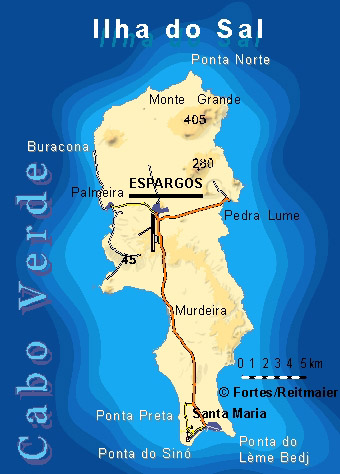
Flat, developed island with pristine beaches, water sports, and a sea turtle nesting reserve.

The capital city with colonial architecture, markets, and cultural venues; inland villages offer authentic Creole daily life.
Cabo Verde (Cape Verde) is an archipelago of 10 islands and 5 islets scattered across the Atlantic, 500km off the Senegal coast. The islands are volcanic with dramatic lava formations, sparse vegetation (some nearly desert), and a scorched, windswept landscape. The climate is arid; rain is unpredictable. The capital, Praia, sits on Santiago island and is a bustling port city. The islands vary dramatically: Sal is flat and touristy; Santo Antao is mountainous and verdant; Sao Vicente is bohemian with music venues and street art; Maio is quiet and undeveloped. The culture is distinctly different from mainland West Africa. Portuguese colonial influence is deep: language, architecture, food, and social structures reflect five centuries of Portuguese rule. The people are relaxed, multilingual, and proudly Creole (culturally distinct from West African mainland). Music is omnipresent: morna (melancholic ballads) and funaná (accordion-driven dance) dominate. The feeling is island life: slower pace, strong community bonds, and a respect for the ocean that sustains them.
Last checked 26 Jul 2026
Every zone below is rated against a named government advisory and carries the date we last read it. Most of any country is calmer than its headlines.
Exercise a high degree of caution
Government of Canada · checked 26 Jul 2026
Culturally rich and welcoming. Petty theft and scams target tourists in Praia city; violent crime is uncommon. Inland villages are safe and genuinely welcoming.
Avoid: Certain Praia neighborhoods at night (Achada Santo Antonio, Ponta d'Agua). Avoid isolated areas after sunset. Use registered taxis.
UK FCDO · checked 6 Jul 2026
The tourist hub and safest island. Flat, developed, with international airport and resort infrastructure. Petty theft exists but violent crime is rare.
Avoid: Avoid walking alone after dark in Espargos city center (especially near the port). Isolated beach areas are safe during day but not recommended at night.
UK FCDO · checked 6 Jul 2026
Quiet islands with low crime. Excellent for hiking, cultural immersion, and meeting locals. Tourism infrastructure is minimal but welcoming.
UK FCDO · checked 6 Jul 2026
Cabo Verde is ten volcanic islands scattered in the Atlantic roughly 570 kilometres off the coast of Senegal, split by sailors into two groups named for the wind: Barlavento, the windward islands to the north, holding Santo Antao, Sao Vicente, Santa Luzia, Sao Nicolau, Sal and Boa Vista, and Sotavento, the leeward islands to the south, holding Maio, Santiago, Fogo and Brava. The archipelago sits atop the Cape Verde Rise, a bathymetric swell formed by volcanic activity beginning some forty to fifty million years ago, with the islands generally younger toward the west as the African plate has drifted over the hotspot beneath it. Pico do Fogo, on the island of Fogo, rises to 2,829 metres and remains the region's only active volcano, still capable of the violence that shaped every island beneath it. What makes Cabo Verde different from every other country in this guide is a simple and almost startling fact: nobody was here. Every stretch of coast the Portuguese found across the rest of Africa had people on it already, kingdoms, fishing villages, trade networks centuries deep. Cabo Verde had none of that. ...
The full history, the peoples, and pieces written by people from herePraia, the capital on Santiago island, is a modest city of 120,000 where the Atlantic wind always blows and everyone seems to know everyone. Mindelo on São Vicente is smaller, more atmospheric, with a bohemian energy that draws artists and writers. The islands are volcanic and rocky, not lush: barren valleys and dramatic escarpments, with ocean views that take the breath away. The economy is fragile, dependent on fishing, tourism, and remittances from the diaspora. Young Cape Verdeans often leave for Europe or America seeking better lives, which has hollowed the islands of ambition even as it enriches them with resources. Yet those who remain are remarkably positive, their Creole culture distinctive and proud. The music, especially morna and funaná, carries the melancholy and resilience of island life. The food is Portuguese-African fusion: cachupa corn stew, fresh fish, cassava. Tourism is growing steadily.
Festivals and moments worth timing a trip around.
São Vicente's cultural heart hosts one of the Atlantic's most colorful carnivals, with elaborate floats, street parades, and the infectious energy of Cape Verdean celebration.
Musicians from across the archipelago and beyond gather to celebrate morna, funaná, and contemporary Cape Verdean music against the backdrop of Atlantic cliffs.
Jazz and world music take over the capital as international and African musicians perform in venues ranging from concert halls to intimate beach bars.
The country's most remote island becomes a gathering place for traditional celebrations, music, and the unique culture of its close-knit communities.
The streets fill with parades, political speeches, cultural performances, and celebrations of labor and solidarity in Cape Verde's bohemian second city.
Before you go
You have the zones as they stand today, and they do move, so when one in Cabo Verde changes rating or an advisory we cite is rewritten, we will tell you. That is the only reason we will write.
