Countrywide advisory (Government of Canada)
Do not travelAvoid all travel
Government of Canada · checked 26 Jul 2026
 NASA / Public domain (Wikimedia Commons)
Eastern Africa
 South Sudan
Africa's youngest nation, shaped by vast wetlands, river systems, and extraordinary wildlife, with a culture of diverse ethnic groups and deep pastoralist traditions.
✦The White Nile and its massive swamp, the Sudd, slow the river's flow and allow it to reach Cairo; 60% of Egypt's water comes from South Sudan.
✦South Sudan became Africa's 54th nation in 2011, marking the continent's most recent independence.
✦The Bor Dinka and Murle people traditionally use cattle as currency and measure wealth in cattle herds, not money.
One of the world's largest freshwater wetland systems with exceptional bird watching and wildlife density.
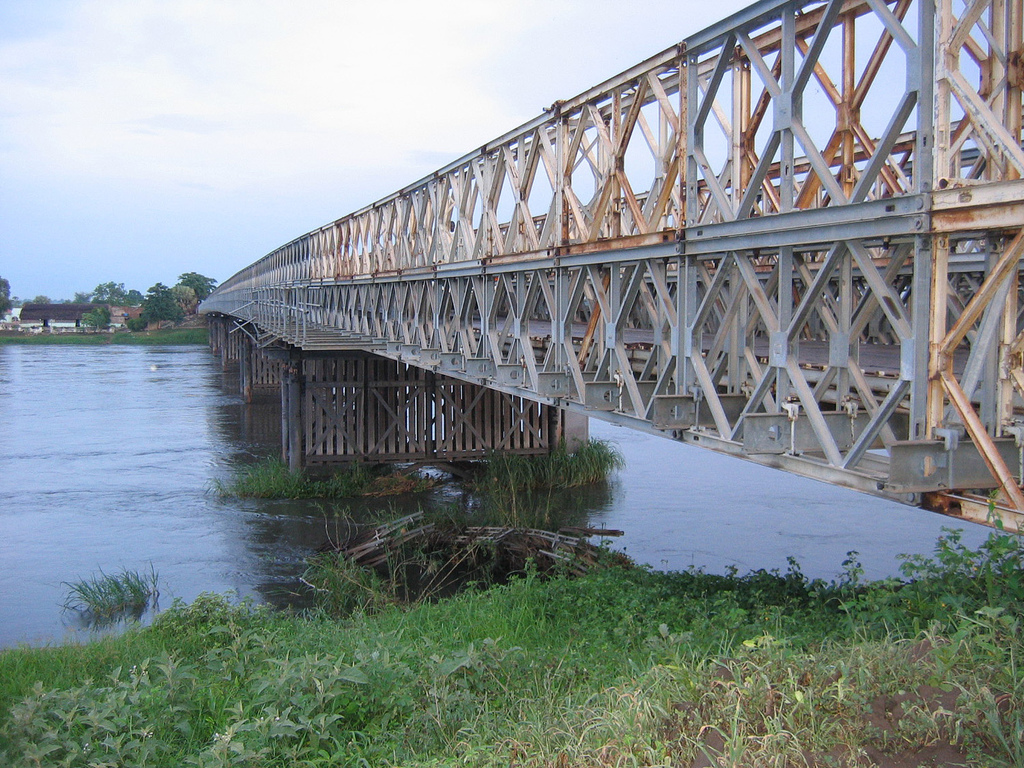
The world's longest river in its upper reaches, offering riverine wildlife, spiritual significance, and trading heritage.
Capital city's commercial heart with bustling markets, government institutions, and riverside location.
South Sudan straddles the upper Nile River and encompasses the Sudd, one of the world's largest freshwater wetland systems. Landscapes range from swampland in the central regions to savanna, grasslands, and forest in the south and east. The nation is home to exceptional biodiversity including vast wildlife migrations. Culturally, South Sudan is a mosaic of ethnic groups with distinct pastoralist, agricultural, and fishing traditions rooted in Nilotic and Bantu peoples. Travel here is challenging due to ongoing instability, but visits to accessible regions offer unparalleled encounters with wildlife, riverine cultures, and one of Africa's least-traveled frontiers.
Last checked 26 Jul 2026
Every zone below is rated against a named government advisory and carries the date we last read it. Most of any country is calmer than its headlines.
Avoid all travel
Government of Canada · checked 26 Jul 2026
Active armed conflict, limited government control, and ongoing humanitarian emergencies. Access is extremely restricted; evacuation routes are unreliable. Armed groups control much of the territory.
Avoid: Unity State, Upper Nile State, parts of Eastern Equatoria
UK FCDO, US State Department · checked 6 Jul 2026
Capital city has functioning government presence but security is volatile. Armed robbery, carjacking, and occasional armed clashes between military factions occur unpredictably. UN presence provides some stabilization.
Avoid: Outskirts of Juba, Yei region, areas near military barracks
UK FCDO, US State Department · checked 6 Jul 2026
Active armed conflict between government and opposition forces. Kidnapping, armed robbery, and ambushes on roads are documented. Civilian displacement is ongoing.
Avoid: Rural areas, roads outside major towns, regions bordering Central African Republic and Democratic Republic of Congo
UK FCDO, US State Department · checked 6 Jul 2026
Police
No national number
Police, no central emergency number
Ambulance
No national number
No public ambulance service
Hospital
+211921070001
AmbuMed Hospital
Before South Sudan had a name, it had the Sudd, and everything about this country's history bends around that swamp. The White Nile enters the region as a river and comes out the other side having lost itself in a maze of channels, floating islands of papyrus and seasonal floodplain that at its lowest covers something over 30,000 square kilometres and at flood can spread past 130,000, an area larger than England. Steamers choke on the vegetation mats. Channels close overnight and reopen somewhere else. For Egypt, whose civilisation depended on knowing exactly where the Nile went, the Sudd was the point past which the map went blank for millennia. It was not until 1839 to 1841, when the Ottoman-Egyptian officer Selim Bimbashi led three river expeditions south from Khartoum with European geographers aboard, that anyone from the north pushed a boat through the swamp far enough to reach the higher ground near what is now Juba. ...
The full history, the peoples, and pieces written by people from hereJuba, the capital, is a city in construction, literally and metaphorically. New roads appear; government buildings rise; international organizations and NGOs establish offices. The Nile runs through the city, a constant presence and a lifeline. Outside the capital, the landscape is vast and green, dotted with cattle herds, villages, and communities that have endured unimaginable hardship. The people are warm and curious toward visitors, eager to talk, to share stories, to show what remains. Daily life is challenging; electricity is sporadic, goods expensive, security concerns real. But there's a palpable sense that this nation, however young and broken, is determined to build something of its own.
Festivals and moments worth timing a trip around.
The nation celebrates its founding; Juba fills with flags, parades, and community gatherings; speeches and cultural performances mark another year of independence.
Celebrations along the Nile River with water sports, music, and fishing traditions; communities gather to honor the river that sustains them.
A spiritual and musical celebration where participants sing, dance, and enter trance states as part of traditional healing and community ritual.
In pastoral communities, young men and cattle herds gather for celebrations, dances, and rituals that connect them to ancestral traditions.
Christian communities gather in churches and homes; the festivities blend local traditions with Christian observance, creating unique celebrations.
Before you go
You have the zones as they stand today, and they do move, so when one in South Sudan changes rating or an advisory we cite is rewritten, we will tell you. That is the only reason we will write.