Countrywide advisory (Government of Canada)
Do not travelAvoid all travel
Government of Canada · checked 26 Jul 2026
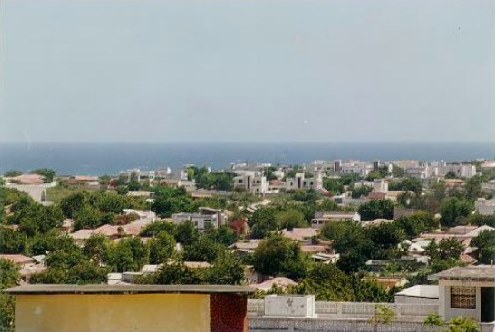
 AMISOM / CC0 (Wikimedia Commons)
Eastern Africa
 Somalia
A nation rebuilding with stunning Indian Ocean coastlines, ancient Islamic architecture, and a resilient culture of pastoralism and trade.
✦Somali is one of Africa's oldest written languages, with a script adopted nationally only in 1972.
✦Somalia is famous for its poetry tradition; poems were historically used as political discourse and historical record.
✦The country is the world's largest producer of frankincense and myrrh, harvested from acacia forests in the north.
Historic port district with Swahili-Arab architecture, narrow alleys, and waterfront heritage; partially rebuilt after conflict.

Mogadishu's principal recreational beach with seafood restaurants and sunset views over the Indian Ocean.

Capital of Somaliland with functioning markets, museums, and relative stability compared to southern Somalia.
Somalia occupies the Horn of Africa's most strategically positioned territory, with over 3,000 km of Indian Ocean coastline. The landscape spans arid pastoral regions inland, fertile river valleys between the Juba and Shabelle rivers, and lush coastal ecosystems. The culture is rooted in Somali pastoralism, Islamic tradition, and maritime heritage dating to the medieval spice trade; Mogadishu was once a thriving port city rivaling Zanzibar. A visit requires serious preparation, strong local partnerships, and acceptance of significant logistical and security constraints. The experience is one of genuine cultural depth, warm hospitality in accessible areas, and frontline observation of African resilience.
Last checked 26 Jul 2026
Every zone below is rated against a named government advisory and carries the date we last read it. Most of any country is calmer than its headlines.
Avoid all travel
Government of Canada · checked 26 Jul 2026
Capital city and surrounding regions remain volatile. Al-Shabaab attacks occur sporadically; kidnapping and armed robbery are serious risks.
Avoid: Southwest Mogadishu, Baladweyne, Middle Shabelle region
UK FCDO, US State Department · checked 6 Jul 2026
Piracy activity has declined but armed groups and clan conflicts remain active. Kidnapping of international personnel is a documented risk.
Avoid: Coastal regions from Eyl southward, disputed border with Somaliland
UK FCDO · checked 6 Jul 2026
De facto independent Somaliland is significantly more stable than southern regions. Hargeisa and Borama have functioning institutions and lower incident rates, though the political status remains contested internationally.
Avoid: Eastern border regions near Puntland, disputed areas
UK FCDO · checked 6 Jul 2026
Long before anyone called this stretch of coast Somalia, Egyptian expeditions were sailing south in search of a place they called Punt: a source of myrrh, frankincense, gold, ivory and live baboons that appears on temple reliefs from as early as the Old Kingdom and most famously on Hatshepsut's mortuary temple at Deir el-Bahari, around 1470 BCE. The Egyptians never left coordinates, only descriptions of the journey, the goods and the people who traded them, and that gap has kept archaeologists arguing for over a century. Punt has been placed in Arabia, in Sudan, in Eritrea and along the Somali and Somaliland coast, and a recent isotope study of mummified Egyptian baboons narrowed the likely homeland to a belt running through modern Eritrea, Djibouti, Somalia, Somaliland and Yemen rather than to any single kingdom. The honest answer is that Punt was almost certainly somewhere in this neighbourhood, and that no excavation has yet produced the evidence that would settle exactly where. The oldest confirmed human presence in the region needs no debate about geography, only about age. Laas Geel, a cluster of granite rock shelters outside Hargeisa, holds some of the best preserved rock art anywhere on the continent: rows of long-horned cattle painted in red and white ochre and dressed in ceremonial robes, alongside herders, dogs and wild animals. ...
The full history, the peoples, and pieces written by people from hereMogadishu is rebuilding with visible determination: new restaurants opening, young professionals working in tech and finance, university students discussing futures that seemed impossible five years ago. The markets still throb with activity; the waterfront still holds the promise of trade. Outside the capital, the landscape shifts from urban to pastoral to desert; nomadic pastoralists still move across rangeland with camels; traditional culture persists. There's an energy to Somalia's recovery that feels genuine, not manufactured. Electricity is unreliable but returned; schools are crowded; the Somali language, Somali poetry, Somali entrepreneurialism all pulse with life. It's not safe everywhere and not easy, but it's undeniably alive.
Festivals and moments worth timing a trip around.
Parades and celebrations mark Somalia's freedom; families gather, flags appear, speeches reflect on what independence means after decades of state collapse.
Somali and African musicians perform; live concerts on rebuilt stages celebrate the return of public cultural life to the capital.
Poetry readings, cultural performances, and celebrations of Somali oral traditions; poets recite classical verse and new work that explores the nation's past and future.
The northern city hosts readings and celebrations of Somali literature; international and local authors gather; book lovers converge for intellectual community.
Families and communities gather for prayers, feasts, and celebrations; the energy is joyful and the mosques fill with worshippers giving thanks.
Before you go
You have the zones as they stand today, and they do move, so when one in Somalia changes rating or an advisory we cite is rewritten, we will tell you. That is the only reason we will write.