Countrywide advisory (Government of Canada)
Do not travelAvoid all travel
Government of Canada · checked 26 Jul 2026
 Dan Lundberg / CC BY-SA 2.0 (Wikimedia Commons)
Western Africa
 Niger
NigerNiger straddles Sahel and Sahara with ancient Hausa trading cities, stunning desert landscapes, and vibrant markets. One of the world's youngest populations.
✦The Ténéré Desert, part of the Sahara, stretches for 1,200 kilometers with almost no vegetation except the legendary Arbre du Ténéré.
✦Niger's Zinder has one of West Africa's oldest and most intact traditional medinas with labyrinthine streets predating modern nations.
✦The Nigerien people speak Hausa, one of Africa's most widely spoken indigenous languages, with millions outside Niger speaking it.
UNESCO World Heritage mosque with distinctive adobe architecture in the Saharan city. Currently off-limits due to security.
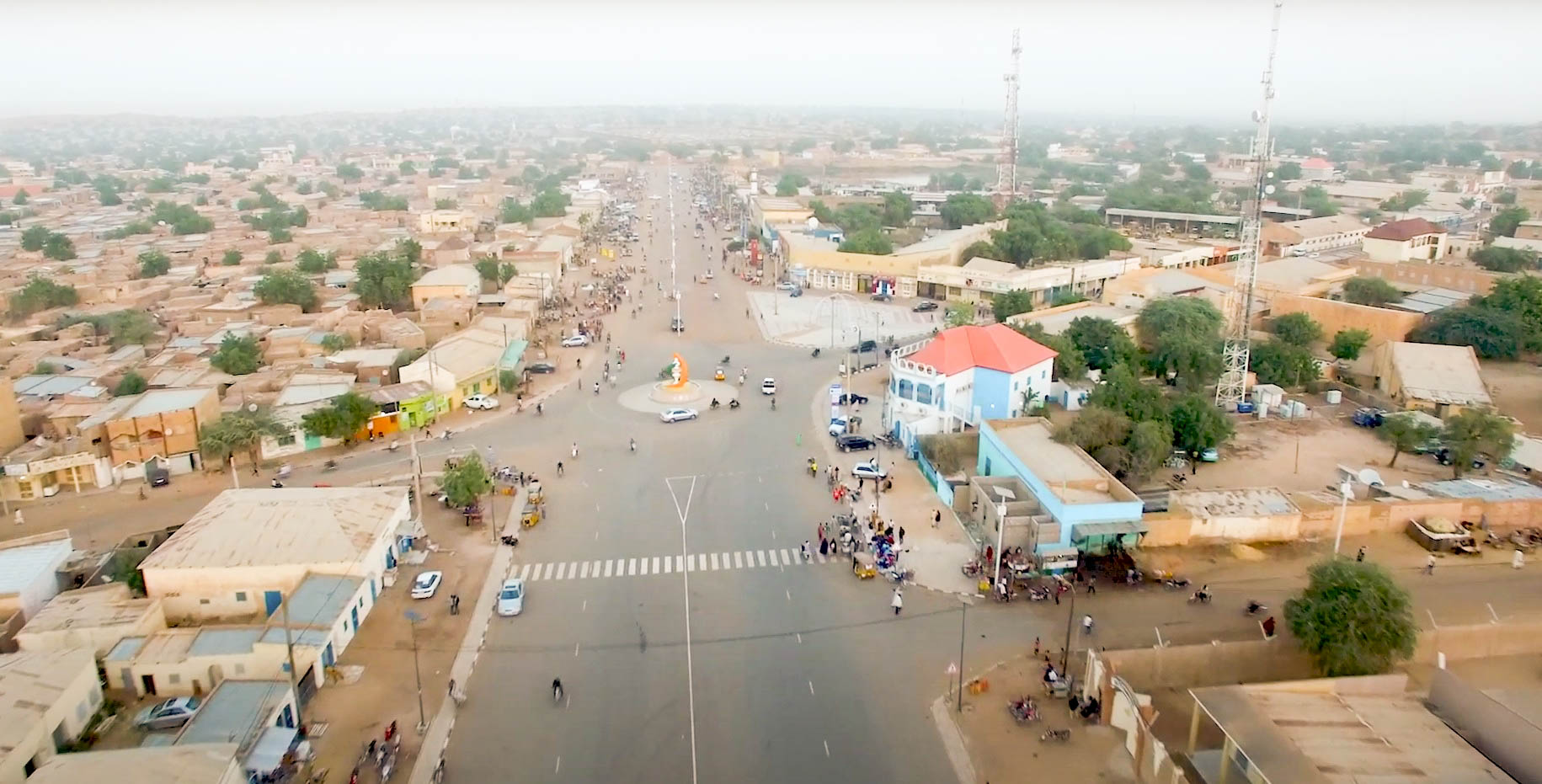
Ancient Hausa trading city with preserved old quarters, sultanate palace, and traditional architecture.

Niger's premier museum with artifacts, ethnography, and historical displays.
Niger is a large Sahel-Sahara nation with a young, growing population and distinct cultural zones. The Niger River flows through the southwest, creating agricultural areas around Niamey and Dosso. The center and north are increasingly arid, transitioning to Sahara. Hausa and Djerma peoples dominate the south; Tuareg and Fulani inhabit the north. Zinder is an ancient trading city with old quarters intact. Agadez is a Saharan fortress town on caravan routes. The country faces severe security challenges from jihadist armed groups; much of the nation is off-limits per Western advisories. However, southern regions around Niamey and the Hausa heartland remain accessible to careful visitors.
Last checked 26 Jul 2026
Every zone below is rated against a named government advisory and carries the date we last read it. Most of any country is calmer than its headlines.
Avoid all travel
Government of Canada · checked 26 Jul 2026
The entire northern and northeastern regions are under armed group control and jihadist activity. Kidnapping and violence are common. All advisories recommend against all travel.
Avoid: Do not travel to Agadez, Arlit, Diffa, or any northern region.
UK FCDO, US State Department · checked 6 Jul 2026
Niamey is reasonably secure for careful visitors. Armed robbery and theft occur; avoid night travel and isolated areas.
Avoid: Avoid traveling alone at night, avoid political demonstrations, avoid slums.
UK FCDO · checked 6 Jul 2026
The southern Hausa regions are historically safer than the north. Travel is possible with local guides and careful planning.
Avoid: Avoid areas close to the border with Nigeria (Maradi region).
UK FCDO · checked 6 Jul 2026
Western regions including Dosso are reasonably safe. Infrastructure is basic but travel is possible with preparation.
UK FCDO · checked 6 Jul 2026
Twelve thousand years ago the Sahara that swallows two-thirds of Niger was not desert at all. Monsoon rains pushed north, and the basin now called the Tenere held a lake ringed by reeds, fish, crocodiles and the people who lived among them. The evidence sits at a site called Gobero, found in 2000 by the palaeontologist Paul Sereno and his team while they were actually hunting dinosaurs. What they walked into instead was the largest known Stone Age cemetery in the Sahara, roughly two hundred burials layered across five millennia. The peer-reviewed dating from Sereno's team places the first occupants, a tall, robust people known as the Kiffian, in the cemetery around 7700 to 6200 BCE, hunting and fishing beside the lake. Then the rains failed. For close to a thousand years the basin was too dry to hold anyone, and the Kiffian world disappears from the record. When the lake returned, a different and more slender population, the Tenerean, buried their dead there again between roughly 5200 and 2500 BCE, this time with ornaments of bone, ivory and shell, and in one grave a woman and two children arranged with wild flowers still traceable in the soil. ...
The full history, the peoples, and pieces written by people from hereNiamey spreads along the Niger River, a laid-back capital where life unfolds in markets, mosques, and riverside gatherings. The city feels less frantic than other West African capitals, with a slower rhythm and unexpected charm. Outside the capital, Niger's diversity is stark: the south is agricultural and greener, while the north bleeds into the Sahara, home to Tuareg herders and traders. Music, particularly the hypnotic sounds of traditional instruments and modern interpretations, fills neighborhoods. Food centers on millet, groundnuts, and rice, with street vendors selling fresh-grilled meat and rich stews. Niger feels authentic precisely because tourism infrastructure is minimal; visitors encounter genuine daily life, resilient communities, and landscapes that range from river valleys to Saharan dunes. It is a place of contrasts where tradition and modernity collide daily.
Festivals and moments worth timing a trip around.
Niger celebrates independence from France with parades, cultural performances, and ceremonies throughout Niamey and regional capitals, reflecting national pride and unity efforts.
A celebration of literature, film, and intellectual life attracting writers, filmmakers, and artists. The festival showcases African and international works, fostering cultural dialogue.
Traditional Tuareg, Hausa, and modern music performances celebrate Niger's diverse musical heritage. The festival draws audiences and performers from across the Sahel region.
Niger's Muslim majority celebrates Ramadan with fasting and evening prayers, culminating in joyful Eid festivities with feasts, new clothing, and family reunions nationwide.
Nomadic herders gather near Tahoua for a colorful festival of pastoral culture, camel racing, and traditional ceremonies marking the transition from wet to dry season.
Before you go
You have the zones as they stand today, and they do move, so when one in Niger changes rating or an advisory we cite is rewritten, we will tell you. That is the only reason we will write.
