Countrywide advisory (Government of Canada)
Reconsider travelAvoid non-essential travel (with regional advisories) Regional advisories apply; see the source for zone-level detail.
Government of Canada · checked 26 Jul 2026
 Obiazi Emefile / CC BY-SA 4.0 (Wikimedia Commons)
Western Africa
 Nigeria
Nigeria is West Africa's cultural and economic powerhouse, a kaleidoscope of over 250 ethnic groups bound by Nollywood, Lagos energy, and four centuries of trade. Venture into ancient kingdoms, contemporary art districts, and some of the continent's most generous and spirited communities.
✦Nigeria's population rivals the entire United States, yet it is a single African nation.
✦Nollywood produces more films annually than Hollywood, making Nigeria the world's second-largest film industry by output.
✦The Yoruba concept of community governance influenced Pan-African thinking and inspired independence leaders across the continent.
Urban nature reserve with walking trails, bird-watching, and canopy climbing.
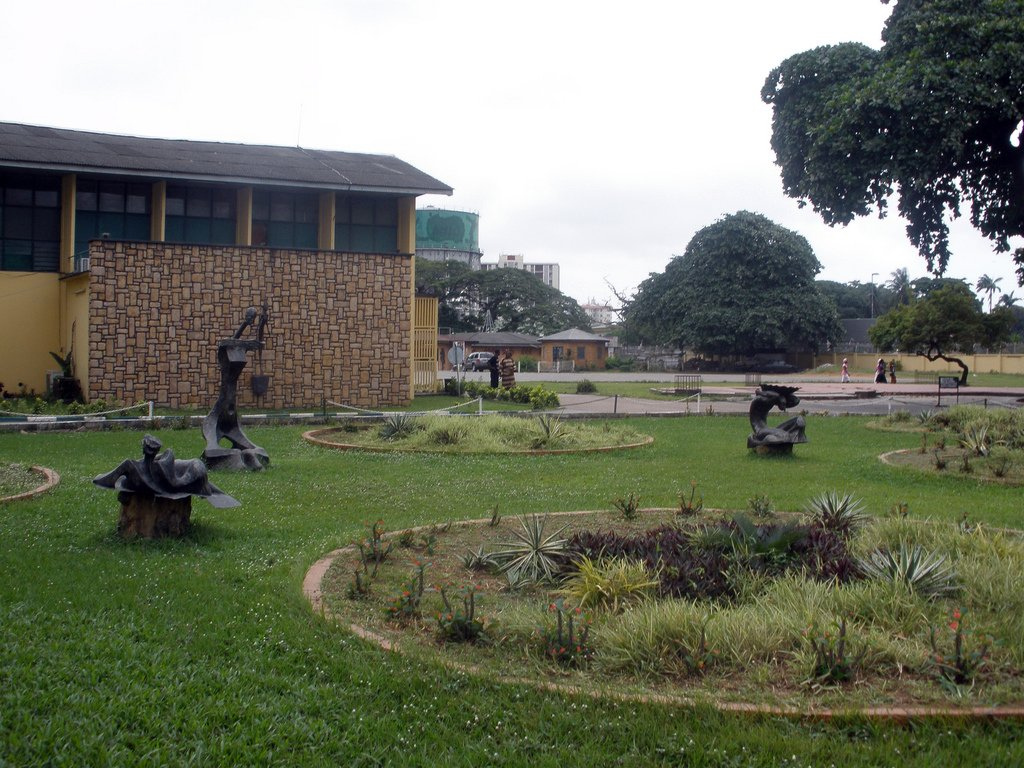
Nigeria's premier museum housing Nok terracottas, Benin bronzes, and colonial artifacts.

Scenic river town with colonial history, seafood, and December carnival parade.
Nigeria stretches from the Atlantic coast through rainforest and savanna to the Sahel edge. The Niger Delta's creeks meet Lagos's urban sprawl; the north guards ancient Hausa-Fulani cities like Kano and Katsina with their indigo dyers and horse parades. The southeast is Igbo heartland, fast-moving and commercial; the southwest is Yoruba country, cradle of kingdoms, beadwork, and philosophy. The trip feels electric because Nigerians insist on encountering life fully. You will eat well (jollof rice debates are serious), navigate crowds with patience, and constantly be invited to conversations. Security consciousness is essential: major cities and tourist zones are generally safe for travellers with standard precautions, but northern regions and the Niger Delta require careful navigation and local advice. This is a country that rewards preparation. Hire a guide in new territory, stay in established areas, and move during daylight when possible. The reward is access to one of Africa's richest cultural landscapes and some of its warmest hospitality.
Last checked 26 Jul 2026
Every zone below is rated against a named government advisory and carries the date we last read it. Most of any country is calmer than its headlines.
Avoid non-essential travel (with regional advisories) Regional advisories apply; see the source for zone-level detail.
Government of Canada · checked 26 Jul 2026
Northern cities house ancient sultanates, indigo dye pits, and Hausa culture. Boko Haram and regional instability make this zone high-risk and not recommended for tourists without deep local ties.
Avoid: Borno, Yobe, and parts of Adamawa states are high-risk; Katsina and Kano states see occasional attacks. Road travel between cities is inherently risky.
UK FCDO · checked 6 Jul 2026
The Niger Delta is the engine of Nigeria's oil wealth and also a region of militant groups, kidnapping, and piracy. Not recommended for tourists.
Avoid: Avoid traveling to Rivers, Bayelsa, and Delta state interiors. Port Harcourt itself sees armed robbery and kidnapping; coastal communities see piracy.
UK FCDO · checked 6 Jul 2026
Lagos is Nigeria's commercial hub with beaches, art galleries, and nightlife. Surrounding regions (Abeokuta, Ibadan, Ile-Ife) are culturally rich but require awareness.
Avoid: Avoid nighttime travel in isolated areas. Lekki-Ajah corridor is generally safe but keep valuables secure. Some mainland neighborhoods (Mushin, Ajegunna) see petty crime.
UK FCDO · checked 6 Jul 2026
The southeast is secure for tourism. Enugu, Calabar, and the Cross River region host colonial architecture, carnivals, and forest reserves.
Avoid: Avoid remote areas in Cross River state after dark. Local tensions around resource distribution can affect some rural communities; check locally.
UK FCDO · checked 6 Jul 2026
Abuja is Nigeria's capital and safe for tourists. Jos Plateau offers cool climate and tin mines; Niger state and neighboring zones see intercommunal tensions.
Avoid: Avoid rural areas of Kaduna, Plateau, and Niger states due to herder-farmer conflict history. Certain livestock routes are best not travelled alone.
UK FCDO · checked 6 Jul 2026
Long before the name Nigeria existed, the land between the Niger and Benue rivers already carried some of West Africa's deepest history. Radiocarbon work on plant remains has pushed the Nok culture, centred on the Jos Plateau, back to roughly 1500 BCE, making it one of the earliest complex societies south of the Sahara. The Nok are known above all for hollow, coil-built terracotta figures with stylised triangular eyes and elaborate hairstyles, and for a technological leap that few societies anywhere managed: they moved from stone tools straight into iron smelting without an intervening bronze age. Nok iron-smelting furnaces and separate kilns for firing clay figures point to a society with real specialisation of labour, even though the exact form of its political organisation remains unclear because so little else has survived. By the time Nok culture faded around 500 CE, the linguistic and ethnic map that would matter for the next two thousand years was already forming: Hausa-speaking communities consolidating in the savanna north, Yoruba-speaking peoples clustering around what would become Ile-Ife, and Igbo-speaking communities settling the forest zone east of the Niger with a political tradition that, unlike its neighbours, never centralised into a single kingship. Political consolidation came in waves, each with its own economy and structure of authority. ...
The full history, the peoples, and pieces written by people from hereLagos is a megacity of Lagos is a megacity of contradictions: gleaming towers rise above sprawling slums, traffic snarls at all hours, and yet an unstoppable energy pulses through every neighborhood. Nollywood movies are filmed here, Afrobeats stars record hit songs in studios scattered across the city, and young entrepreneurs are building tech startups that rival global companies. Go to any neighborhood and you'll find street food that stuns, music that moves, and people who dream big despite the obstacles. Beyond Lagos, Nigeria stretches across forests, savanna, and highlands, each region with its own rhythms: Yoruba traditions in the southwest, Igbo markets in the southeast, Hausa calm in the north. Nigerians are known for their directness, humor, and optimism, a people who survive by hustle and create culture that radiates worldwide.
Festivals and moments worth timing a trip around.
A spectacle of color, music, parades, and street parties in Calabar. Thousands dance, colorful floats roll down streets, and the celebration captures Nigeria's exuberant spirit.
Kano, Katsina, and Kano host magnificent processions of emirs on horseback, traditional musicians, and ceremonial displays honoring Hausa and Fulani heritage and authority.
Yoruba devotees and tourists gather in Osun Grove, a sacred forest where traditional rituals, music, and prayers honor the goddess Osun in a spiritual and cultural celebration.
Nigeria celebrates independence with parades, fireworks, and ceremonies throughout the country. The day reflects national identity despite regional differences and past struggles.
Nigeria's Muslim north celebrates Ramadan with fasting and prayer, culminating in festive Eid gatherings, feasts, and family reunions throughout the region.
Lagos celebrates with processions of white-clad figures in elaborate masks and costumes, honoring ancestors and marking the Yoruba calendar new year with music and dance.
Before you go
You have the zones as they stand today, and they do move, so when one in Nigeria changes rating or an advisory we cite is rewritten, we will tell you. That is the only reason we will write.
